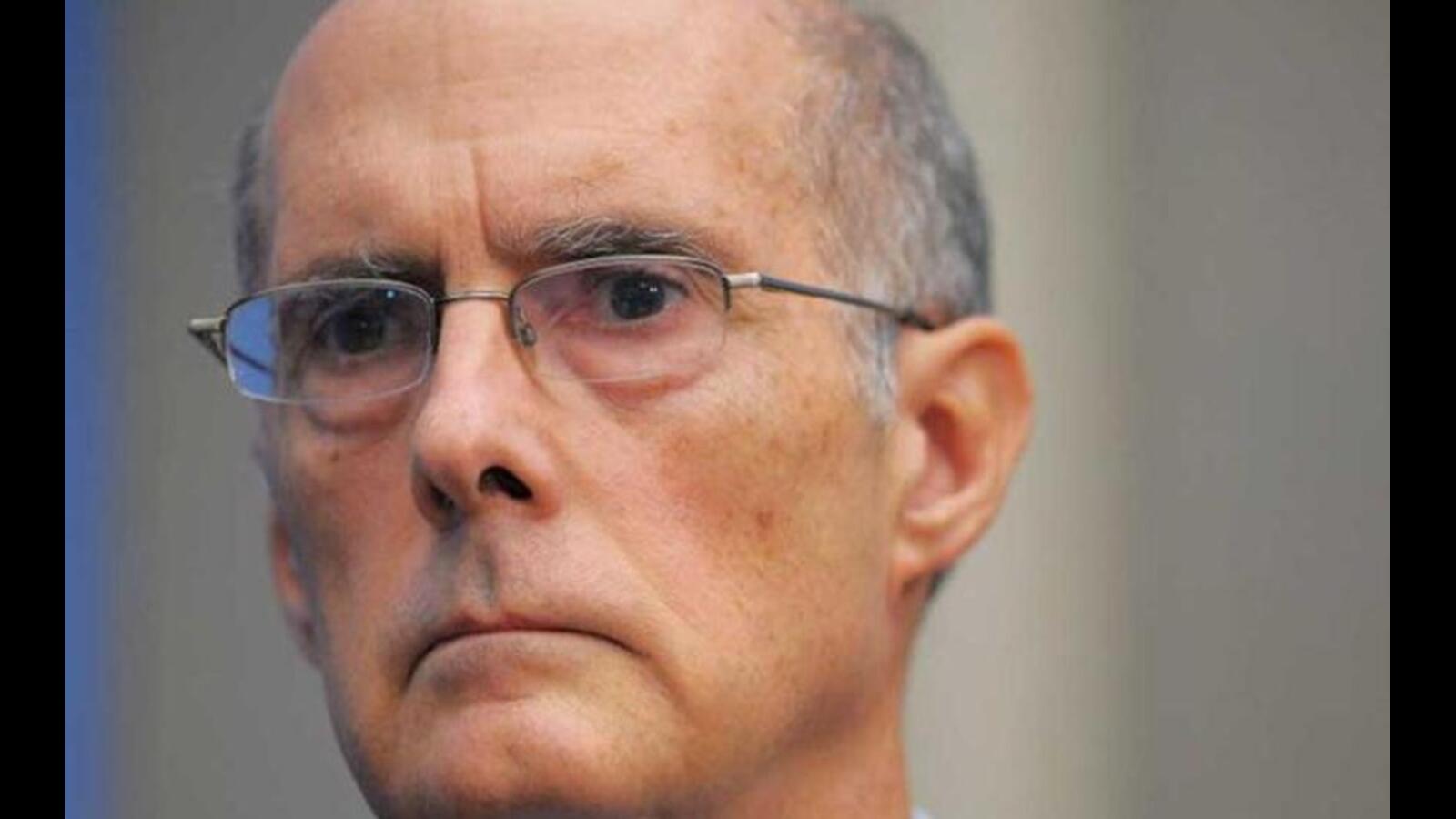
Strobe Talbott, the former US deputy secretary of state widely regarded as one of the principal architects of the turnaround in India-US relations, died in New York on Friday. He was 80.
Talbott, who was born in 1946 and was a product of the postwar American foreign policy establishment, launched a dialogue with external affairs minister Jaswant Singh after India's 1998 nuclear tests at Pokhran. The talks, which Talbott later recalled involved 14 meetings at 10 locations in seven countries on three continents, set the stage for the slow process of burying decades of distrust between the two countries. Less than two years after the tests, President Bill Clinton visited India and addressed Parliament, opening a new era in bilateral ties.
Talbott spent much of his career as an analyst of the Soviet Union during the Cold War and struck up a friendship with Clinton at Oxford. Clinton brought him into the State Department after a two-decade career in journalism, including as a foreign affairs correspondent for Time. In the 1970s, Talbott had covered Secretary of State Henry Kissinger's diplomacy with Indira Gandhi in the months after India's nuclear tests.
According to Talbott's account, Washington pressed five benchmarks on India during the talks: signing the Comprehensive Test Ban Treaty, halting production of fissile material, showing restraint in deploying missiles and warheads, tightening export controls, and resuming dialogue with Pakistan. Relief from sanctions imposed after the Pokhran tests was held out as the prize for compliance, but Singh resisted amid opposition at home. New Delhi was concerned about the perception of giving in to American pressure, and the exercise was referred to as a "dialogue" rather than a "negotiation". The two struck up a warm friendship, with Singh praising Talbott's intellectual ability and integrity.