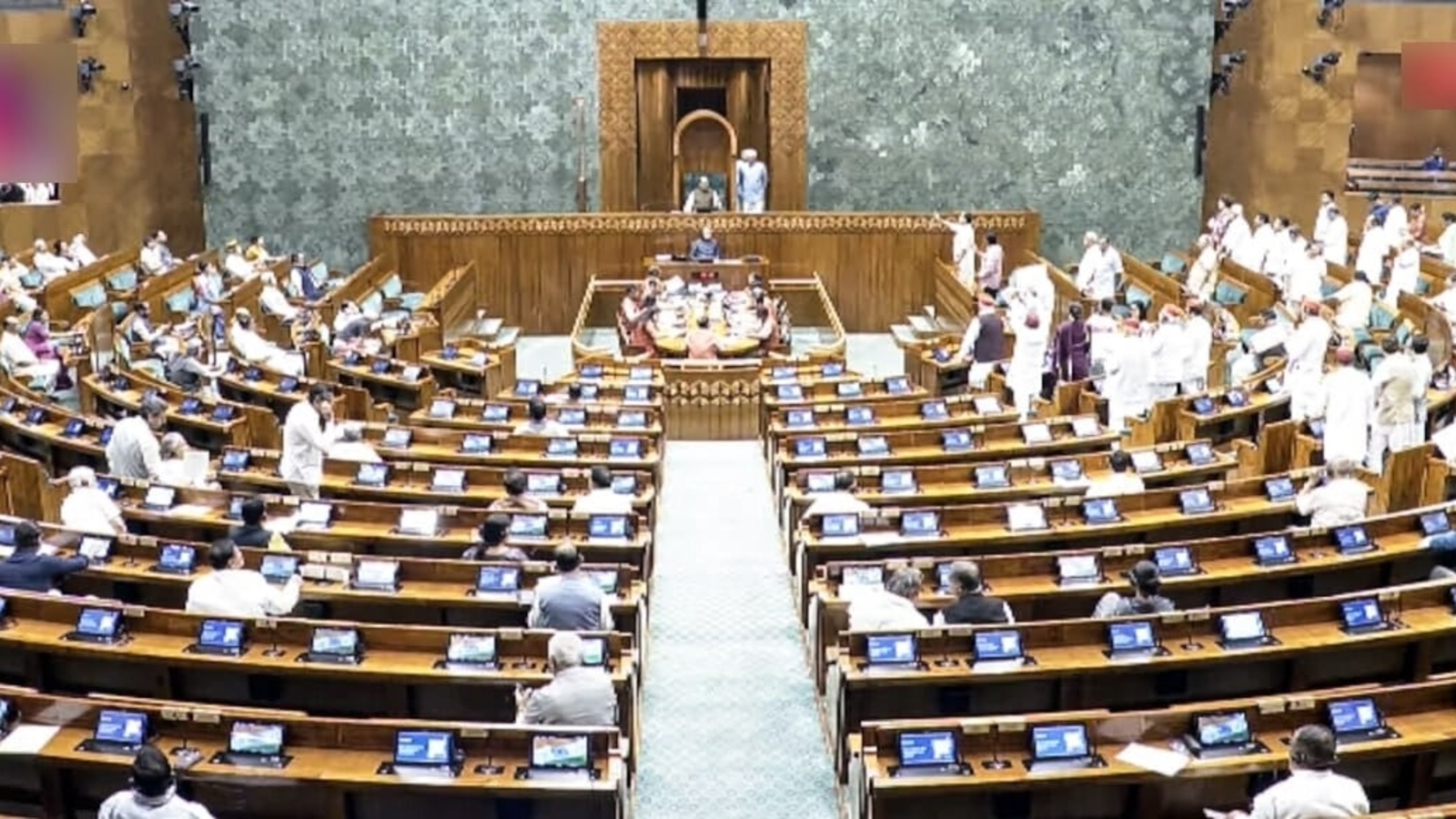
The Union government on Friday introduced a reworked constitutional amendment that guarantees a uniform 50% increase in Lok Sabha seats for every state and Union Territory, a move aimed at addressing southern states' concerns that population-based redistribution could reduce their political influence. The Constitution (132nd Amendment) Bill, 2026 and the Delimitation (Second) Bill, 2026 replace the legislative framework that failed to secure the required two-thirds majority in the Lok Sabha on April 17.
Under the new amendment, the Lok Sabha's maximum strength will rise to 815 members from states and 35 from Union Territories, while state legislative assemblies will have a maximum strength of 650. The 50% expansion will apply to each state and UT's existing allocation, preserving their relative share in the House rather than redistributing representation according to population differences. The government retained its central objective of implementing 33% reservation for women in Parliament and state assemblies before the 2029 general elections.
The amendment also seeks to remove uncertainty over when women's reservation would become operational. The 106th Constitution Amendment Act, 2023 had linked implementation to a delimitation exercise following the first census after its commencement; the new amendment provides for reservation to take effect after the first delimitation exercise undertaken following the commencement of the proposed amendment.
The earlier Constitution (131st Amendment) Bill secured 298 votes in favour and 230 against on April 17, falling 54 votes short of the 352 required among the 528 members present and voting. It was the first time since the NDA came to power in 2014 that a constitutional amendment introduced by the government was defeated in the Lok Sabha. The Delimitation (Second) Bill provides for a three-member commission chaired by a serving or retired Supreme Court judge, with the Chief Election Commissioner or a nominated Election Commissioner, and the state election commissioner of the state concerned.