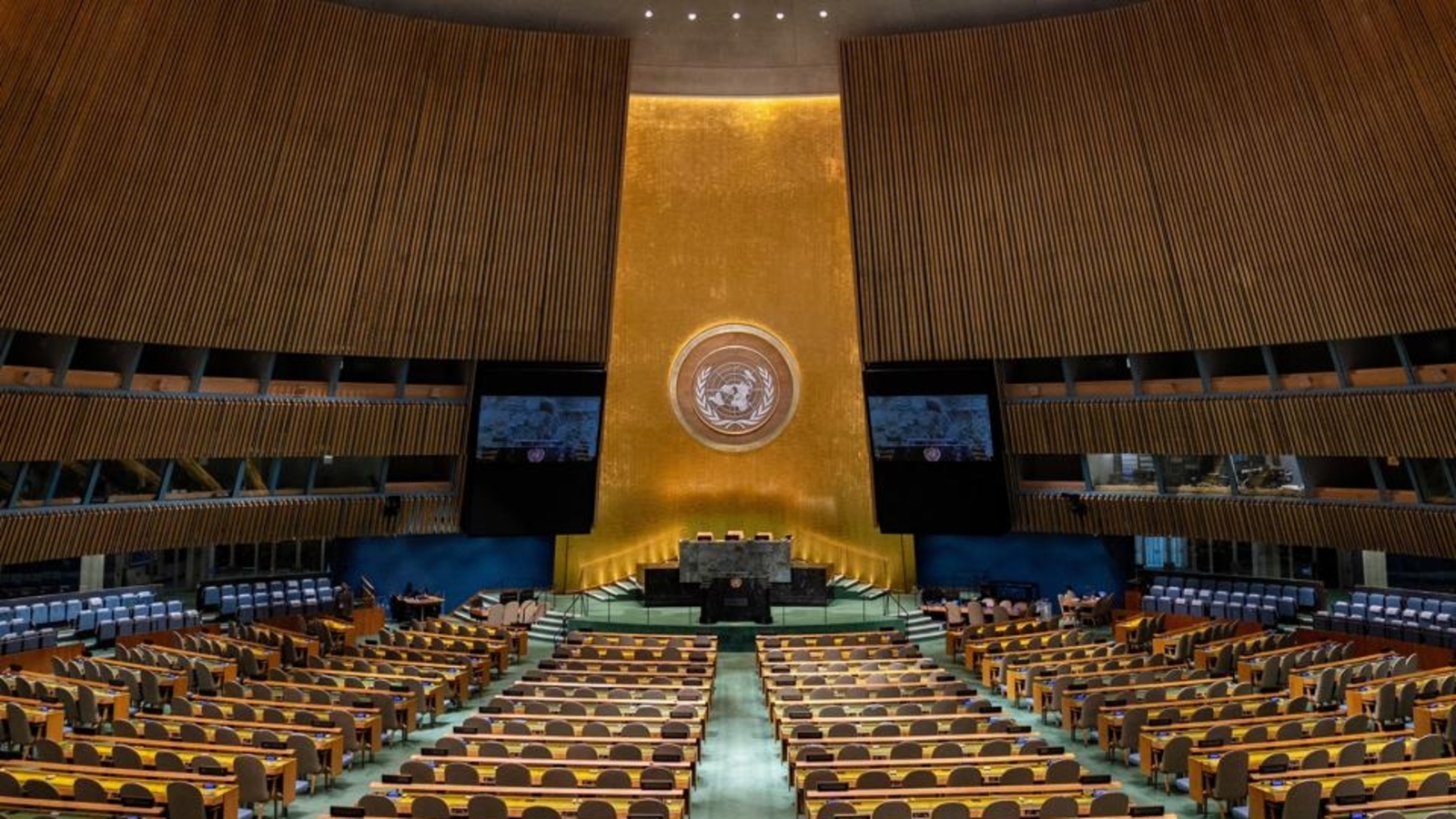
India has raised strong objections to what it called Turkiye's "blatant and intentional" exclusion of New Delhi and other member states from consultations on a resolution on cooperation between the UN and the Organisation of Islamic Cooperation (OIC), and voted against the draft in the General Assembly. The resolution, introduced by Iraq and facilitated by Turkiye, was adopted on Monday by a recorded vote, with 112 nations in favour, six against and 39 abstentions. India, Armenia, Cyprus, Greece, Israel and the United States voted against it.
In her explanation of vote, India's Deputy Permanent Representative at the UN, Ambassador Yojna Patel, said the OIC's Permanent Observer Mission excluded the Indian delegation and several other countries when circulating successive drafts. She described the facilitator's working methods as a "concerning matter" and called for an investigation, saying basic procedures such as acknowledging inputs were "blatantly disregarded." Patel said differences of position among member states cannot justify "blatant and intentional exclusion" from consultations, and that India objects to methods that try to "hoodwink" excluded delegations. India has asked the General Assembly President to investigate and prevent a recurrence. Cyprus and Greece also flagged a lack of transparency and inclusivity in the negotiation process, according to the original report.
Questioning the resolution's substance, Patel said the OIC is not a regional organisation and the rationale for extending its role was unclear. India also rejected references to the ninth session of the OIC Ministerial Conference on Women held in July in Islamabad, whose declaration made references to Jammu and Kashmir. Patel said the resolution contains documents and statements with "unwarranted and factually incorrect references" to India, reflecting continued misuse of the OIC platform for narrow political ends, and that the OIC has no locus standi to comment on India's internal affairs.
In an apparent reference to Pakistan, India voiced regret that the OIC has "once again allowed itself to be systematically misused by one Member State to weaponise OIC resolutions and declarations against India through false and baseless allegations." Patel called on the OIC to uphold objectivity, constructive dialogue and mutual respect, and said sovereign member states take care of their citizens' interests regardless of faith, adding that "such regressive views have no place in today's world."