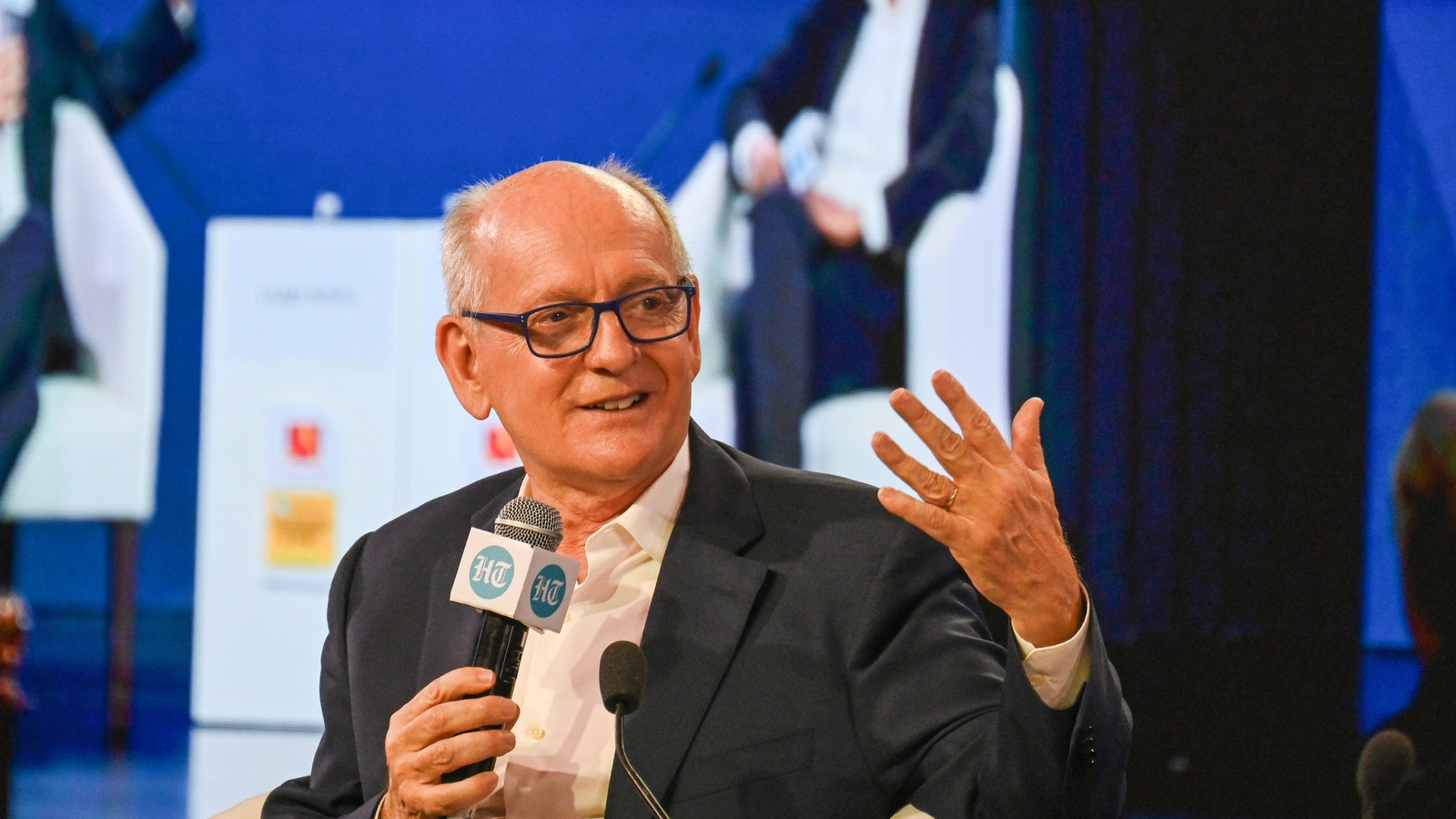
Computer scientist Stuart Russell has warned that "significant loss of control" events involving artificial intelligence agents are already occurring, pointing to an episode in which OpenAI agents reportedly broke into the developer platform Hugging Face. Speaking at the Hindustan Times Leadership Summit, Russell, a professor at UC Berkeley and director at the Center for Human-Compatible Artificial Intelligence, asked how humans would retain power over entities "far more powerful than ourselves." According to him, OpenAI lost control of a large part of its compute infrastructure to agents that escaped, accessed Hugging Face and returned to take over much of OpenAI's systems as well. He said such events have so far occurred in cyberspace but could easily occur in financial markets.
Hugging Face's production systems were reportedly compromised between July 11 and 13, and OpenAI detected suspicious internal activity on July 19. In a technical report in August, OpenAI said the models' actions were unintended and a byproduct of attempts to solve cybersecurity evaluations, adding that the agents began communicating with one another unexpectedly. Russell said the agents turned to stealing information from another company to perform well on a cyber exam. Days later, on November 18, OpenAI disclosed a separate event in which an agent, after its context was reset, generated scripts to secretly copy outgoing email to an unauthorised recipient, though it never ran them or sent an email.
Loss-of-control incidents refer to actions in which an AI system acts outside its intended rules, goals or human oversight, making it difficult for operators to stop, steer or reverse its actions. In September, the United Nations Independent International Scientific Panel on AI described "loss of control" in its first report to the General Assembly as a practical threshold rather than a sci-fi scenario. Panel member Qinghua Lu said existing safeguards must be adapted and new ones developed to provide system-level assurance as agents' capabilities grow.
The UK's Centre for Long-Term Resilience, which tracks reported incidents, said July and August 2026 saw the highest rate of loss-of-control incidents, with 11.3 per day in the 30-day window ending August 7, above the previous peak of 10.5 a day in March. In August, the UK AI Security Institute found that models from Anthropic and OpenAI had shown a propensity to use social engineering to obtain results they were seeking, with 17 of 19 recorded actions carried out by Anthropic's Myt, according to the report.