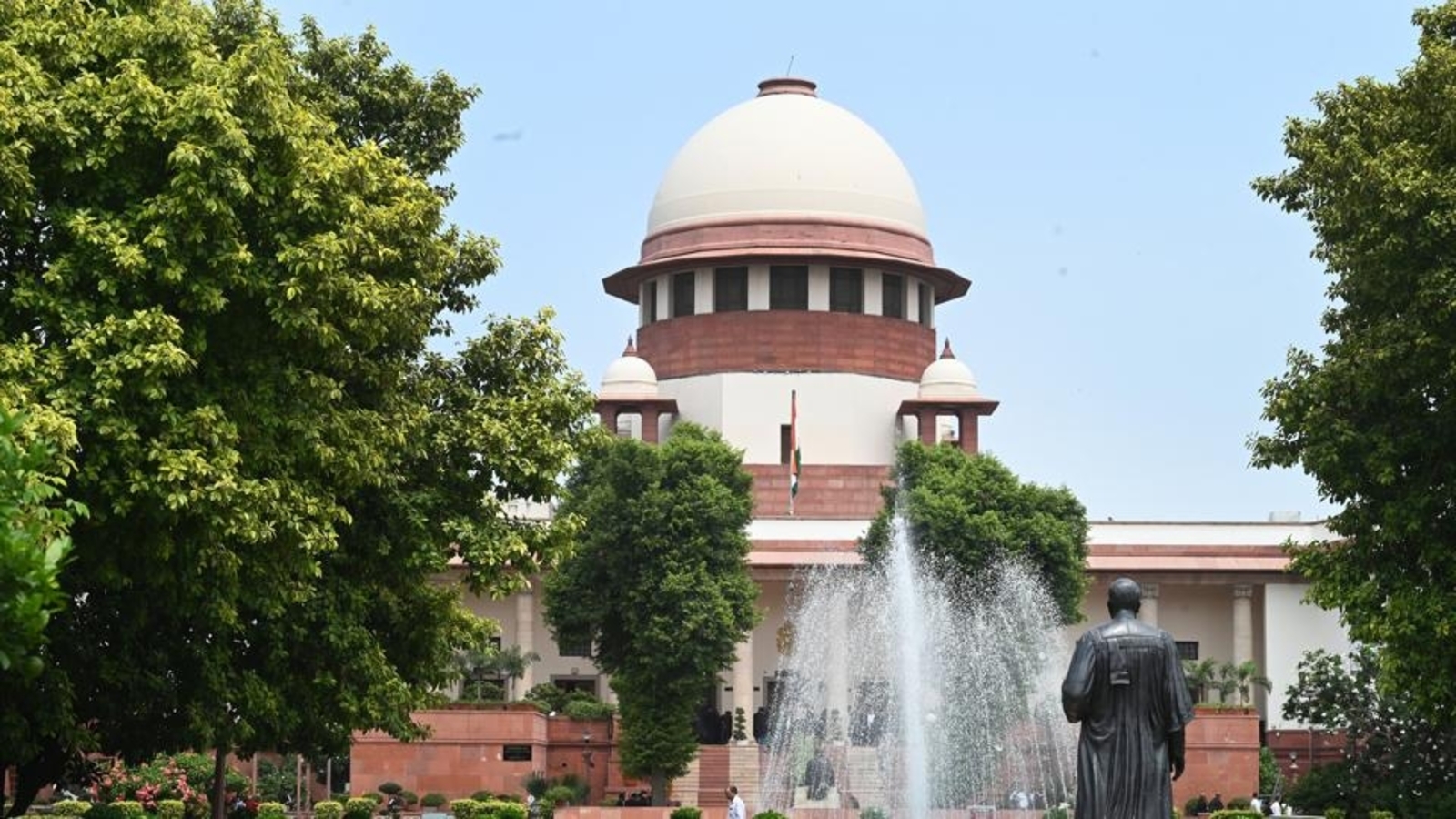
The Supreme Court on Friday held that the Tamil Nadu government and the Madurai district administration had prima facie "wilfully and flagrantly disobeyed" its November 20 order directing the lighting of the Karthigai Deepam lamp at the Deepathoon atop Thiruparankundram hill. The Court directed that the lamp be lit at the Deepathoon on Saturday, November 28, four days after the festival was celebrated on November 24, permitting "all devotees" to light it at the designated spot at least 50 metres away from the dargah. It also directed the CRPF to take necessary steps to protect the dargah.
A Bench of Justices Aravind Kumar and VM Pancholi issued show-cause notices of contempt against the Tamil Nadu Chief Secretary, DGP, HR&CE Commissioner, the Board of Trustees, Chairperson and Trustees of the Arulmigu Subramaniya Swamy Temple at Thiruparankundram, and Madurai Collector Nishant Krishna, asking why contempt proceedings should not be initiated against them. The Court suspended the temple's Board of Trustees and appointed former Madras High Court Justices S Vaidyanathan and V Parthiban as receivers to take immediate charge of the temple administration, directing the CRPF to take over security of the temple premises. The receivers were asked to ensure the lamp is lit using the flame from the lamp at the Uchipillaiyar temple.
Describing the Madurai Collector's preliminary status report as one "shedding crocodile tears," the Court noted that he had personally undertaken before the Madras High Court to implement the November 20 order but failed to do so and shifted blame to the temple authorities, conduct the Court said could lead to "constitutional chaos." The bench said an order of the Court "is not an invitation to negotiation until the Court itself modifies it," and warned that any attempt to undermine constitutional mandate would be dealt with firmly.
The Court directed the Chief Secretary to furnish details of all communications, messages and call records to ascertain whether executive authorities had acted at the behest of political superiors, and to file a personal affidavit confirming that notices had been served on all concerned. All those issued notices must file affidavits within 10 days of service and appear personally before the Court on the next hearing on December 15. The State sought permission for the Chief Secretary and other officials to appear virtually, but the bench directed them to appear in person first.