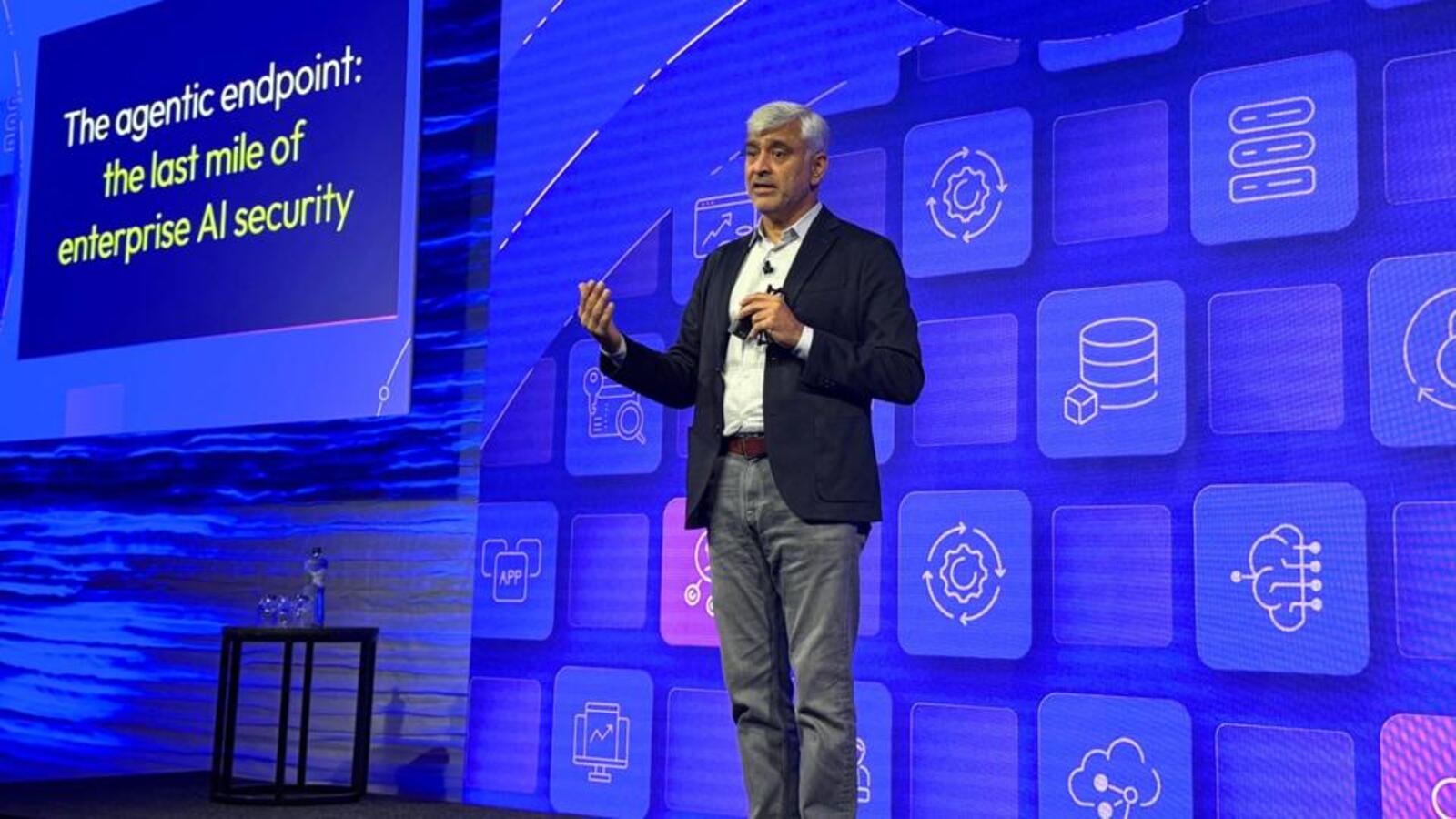
Omnissa, a platform company for securing agentic endpoints, earlier this month announced the expansion of its Omnissa Sovereign Solution (OSS) to six new markets in Europe and Asia. Chief Executive Officer Amit Singh said the move has a significant bearing on how enterprises control and govern their artificial intelligence stack, and that heightened cybersecurity threats in recent weeks add to its importance.
Singh said the security environment is shifting toward one where speed matters far more, since vulnerabilities can be exploited very quickly. Within an organisation's AI setup, an agentic system accesses applications, files and credentials, leaving enterprises to decide what sort of access or profile to allow and whether to rely on open-source or closed models. Beyond AI governance, he said sovereignty is another key consideration, as for many customers it is no longer only about where data resides but also who controls the infrastructure and where AI agents operate.
Describing the architectural change, Singh said AI is moving from something used to something that acts on a user's behalf, with agents opening applications, accessing files, using credentials and taking actions inside the enterprise. A laptop that once supported one employee could soon support dozens of agents, many operating with that person's access and permissions. He described the endpoint as the last mile of enterprise AI security and cited three considerations: accounting for agents as a new kind of actor with their own access, behaviour and risk profile; choosing between open-source and closed models based on business needs; and deciding whether to host AI infrastructure on the public cloud or in a sovereign cloud environment.
On whether business ambitions for autonomous agents and security teams' desire for control can coexist, Singh said they must for enterprises to get meaningful value from AI, with agents given room to operate within clearly defined boundaries while people make the decisions carrying the most consequence. He said such boundaries should not depend on an agent behaving perfectly, since an agent can be manipulated or change course mid-task. Omnissa announced its Elara AI governance layer in September and the OSS expansion in November; Singh said Elara brings together signals across users, identities, devices, applications and AI so organisations can apply policy with a broader view, including discovering shadow AI, setting guardrails and reviewing high-impact agentic changes before execution.