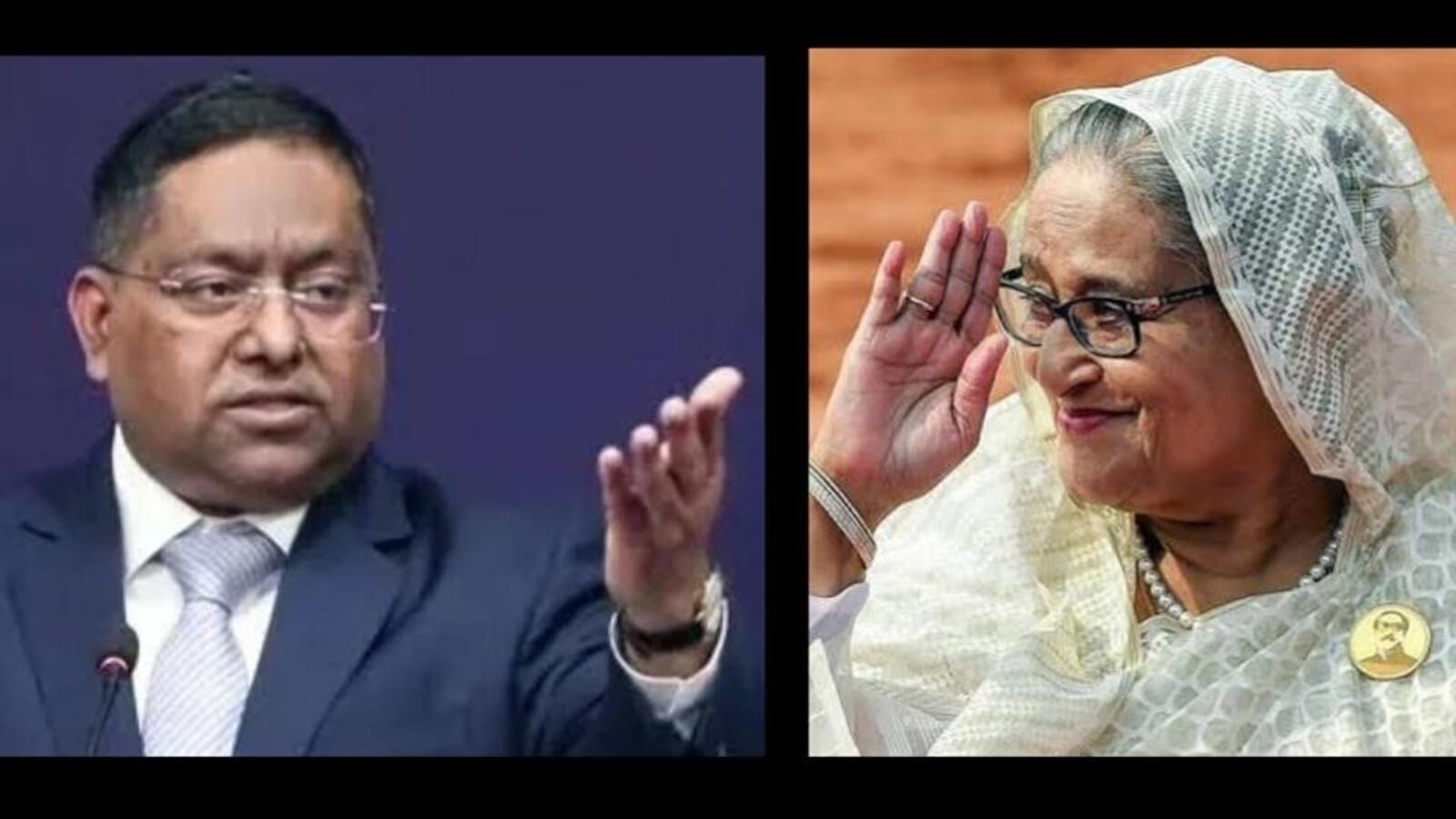
India on Wednesday declined to comment on former premier Sheikh Hasina's plan to return to Bangladesh on December 16, with the external affairs ministry making clear that her intention to return voluntarily should not be conflated with Dhaka's pending extradition request. Hasina, in self-exile in India since her Awami League party was ousted in a student-led uprising in August 2024, announced her plan to return on Bangladesh's Victory Day on Tuesday. Leaders of the ruling Bangladesh Nationalist Party (BNP) have insisted on her extradition and said she will be arrested on her return.
Asked about Hasina's planned homecoming at a regular media briefing, external affairs ministry spokesperson Randhir Jaiswal said this was a matter "between the former prime minister and the Bangladesh government", adding: "I have nothing more to say." Jaiswal said Bangladesh's extradition request, first made in December 2024, is "being examined in line with our established processes", but drew a distinction between it and Hasina's petition to the Bangladesh high commission in New Delhi for a passport and national identity card to facilitate her return. "The case of a citizen willing to return voluntarily to her country on a travel document is a matter separate from the extradition request," he said. People familiar with the matter had earlier said Bangladesh's refusal to issue Hasina a passport is being seen as a delaying tactic, and that the Indian side has created no impediments to her return.
Bangladesh has been on edge over Hasina's planned return, with supporters of her Awami League party organising protests in several parts of the country this month. There have also been violent clashes between supporters of the Awami League, which has been banned, and the BNP in recent days, with some violence in places such as Pabna targeting members of the Hindu minority, which has traditionally backed the Awami League. Jaiswal said India is concerned about the deterioration in law and order and attacks on Hindus. "We understandably are concerned at the incidents of violence against minorities in Bangladesh. We urge the government of Bangladesh to thoroughly investigate these incidents and bring the perpetrators to justice," he said.
On the Ganga Water Treaty, set to expire on December 12, Jaiswal said the two countries have an established mechanism, the Joint Rivers Commission, that looks into "all cross-boundary rivers' issues, including the Ganga", without giving details. Asked about the Indonesian Navy seizing a merchant vessel sailing from China to Bangladesh with 405 tonnes of sodium perchlorate, a chemical used in making rocket and missile propellants, he said: "We have seen some reports on this particular matter. As I've said earlier, we continue to follow developments which have an impact on our interest and take measures as appropriate." The Comoros-flagged MV Star Line was seized on November 7 while headed to Bangladesh with 15 containers of sodium perchlorate, The Dhaka Tribune reported.