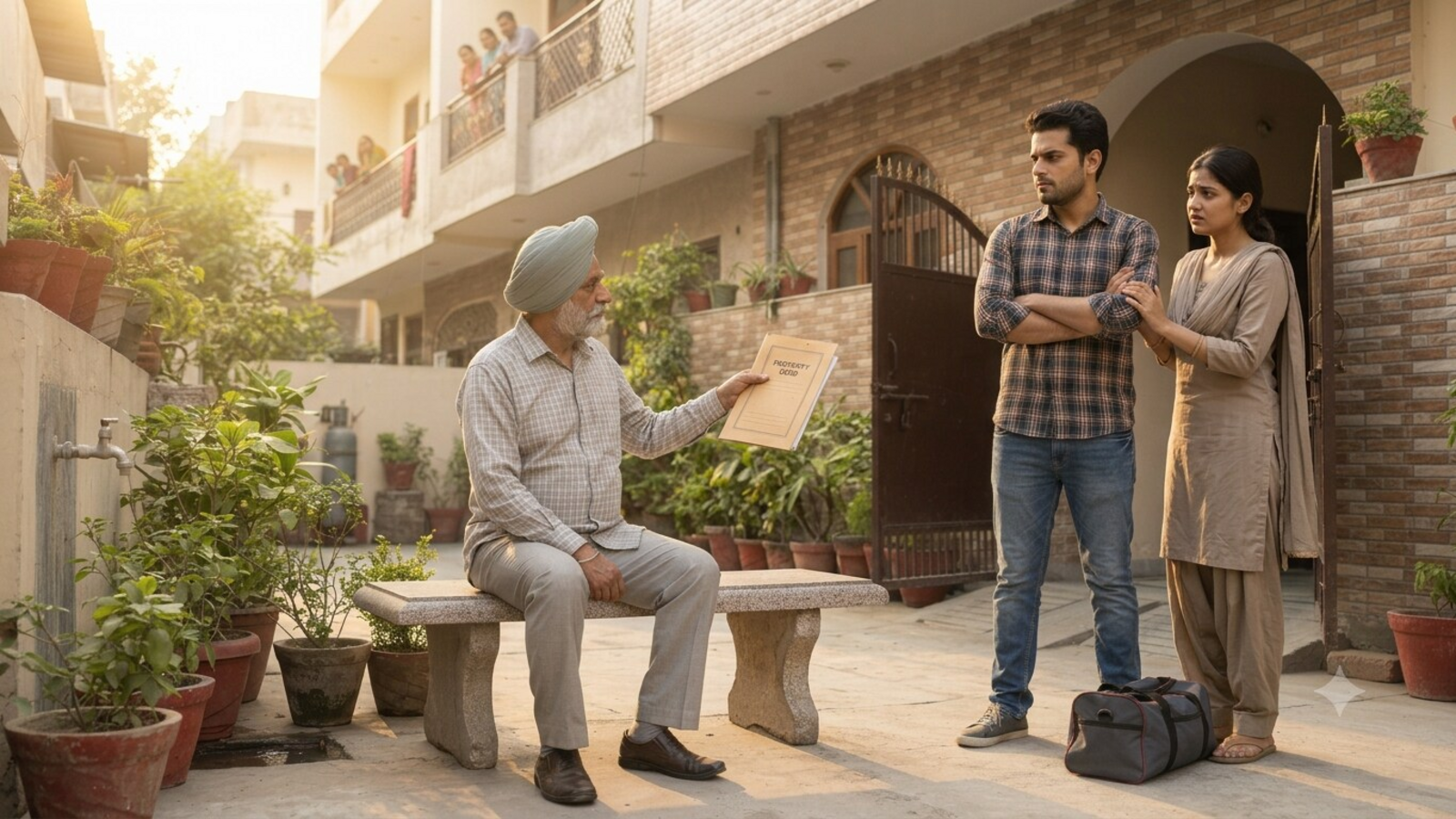
The Delhi High Court has held that senior citizens aged 60 and above seeking to evict their children from self-acquired properties need not necessarily prove harassment or ill-treatment. Justice Amit Mahajan ruled that establishing the need to protect the property and live a peaceful and dignified life can be sufficient grounds under the Maintenance and Welfare of Parents and Senior Citizens Act, 2007.
The court made the observation while allowing an 85-year-old man's plea against orders of the District Magistrate and Divisional Commissioner, directing his eldest son and daughter-in-law to vacate his house in South Delhi's Masjid Moth within four weeks. The SHO concerned was asked to provide police assistance to ensure compliance. The court noted the petitioner was the absolute owner of the property, while the couple had no ownership claims and reportedly resided there solely due to their relationship with him. The judgement was passed on November 20, 2026, in Subhash Chander Malhotra v. Raman Malhotra & Ors, according to Live Law.
Justice Mahajan held that authorities had wrongly insisted the senior citizen establish harassment through clear and cogent evidence before ordering eviction, noting that neither the 2007 Act nor the Delhi Rules of 2009 impose such a requirement. The court observed that mistreatment of elderly parents often occurs within the confines of homes, making it difficult to report with evidence, and questioned two SDM enquiry reports that concluded harassment was not established without supporting findings.
The High Court relied on the Supreme Court's August 2026 ruling in Ravi Kant Gupta v. State of Uttar Pradesh and Pritam Singh v. Government of NCT of Delhi. The petitioner acquired the property from the Delhi Development Authority in 1980, converted to freehold in 2000, and approached authorities in 2022 alleging his son and daughter-in-law refused to vacate. His plea was rejected by the District Magistrate in August 2023 and October 2025, upheld by the Divisional Commissioner in April 2026, prompting him to move the High Court.