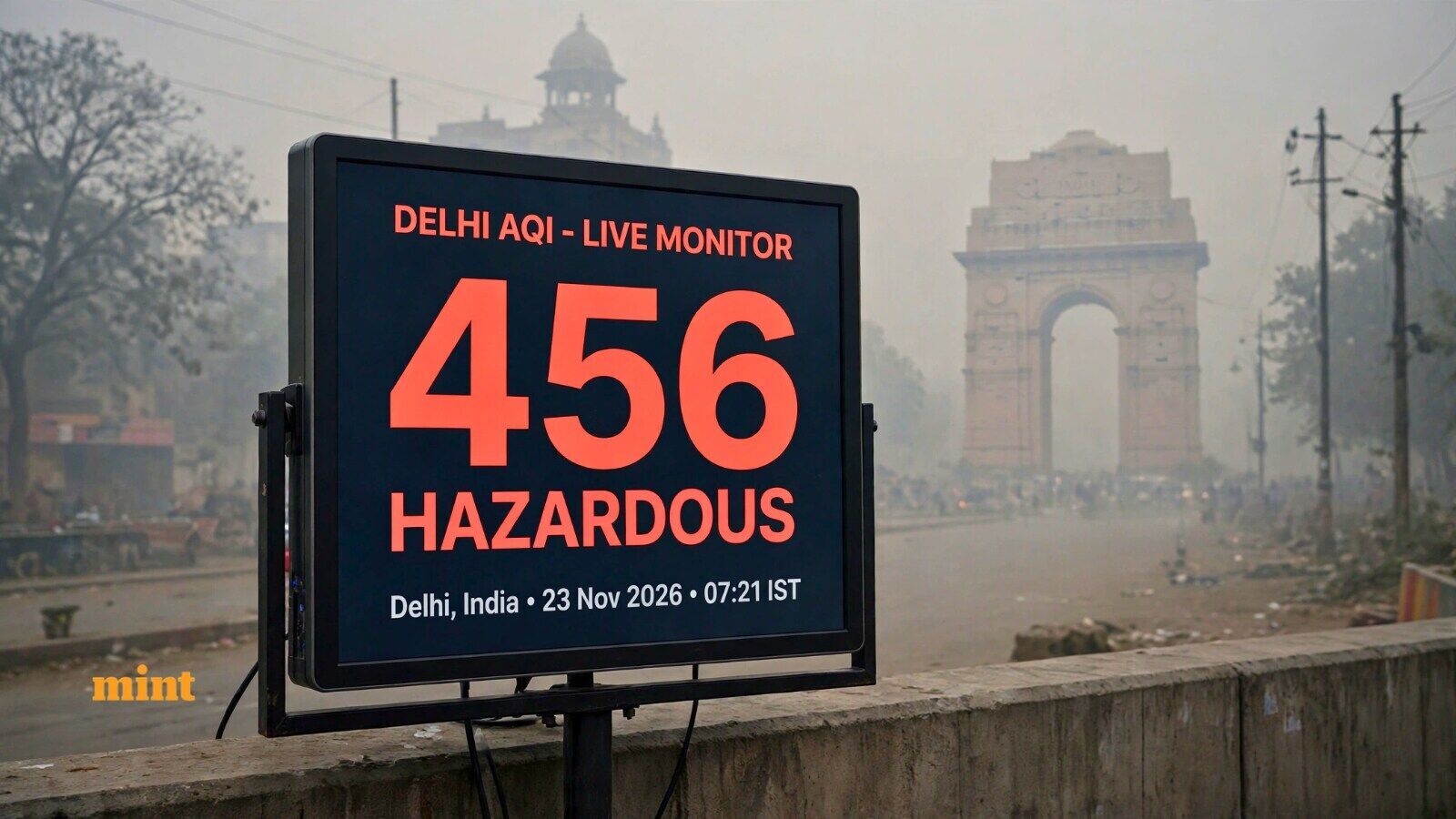
Delhi recorded hazardous air quality on Monday, November 23, with the Air Quality Index (AQI) reaching 456, according to live monitoring data. The reading, taken at 7:21 AM local time, placed the city firmly in the hazardous category.
The concentration of PM2.5 particles stood at 303 micrograms per cubic metre, 20.2 times the WHO guideline, while PM10 levels were 425 micrograms per cubic metre, about 9.4 times the guideline. The monitoring platform classified both as unsafe and ranked Delhi 15th among the world's most polluted cities at that moment. It compared the exposure to smoking approximately 9.5 cigarettes a day and advised residents to stay indoors, use air purifiers and wear N95 masks.
Delhi's pollution has fluctuated through November. The AQI was 306 on November 1 and 461 on November 6, before peaking at 666 on November 9, the month's highest. It fell to 284 on November 15, rose to 406 on November 16 and dropped to 224 the next day. Readings then climbed to 353 on November 19 and 341 on November 20, and stood at 280 on November 22 before Monday's sharp increase.
Other pollutants showed a mixed picture: carbon monoxide at 1,045 parts per billion, sulphur dioxide at four, ozone at three and nitrogen dioxide at 18. The city recorded 16 degrees Celsius with smoky haze, 59% humidity and wind speed of 7.6 kilometres per hour. Delhi's air was far worse than other metros: Mumbai 207, Pune 190, Bengaluru 184, Chennai 176, Ahmedabad 171, Hyderabad 165 and Kolkata 102.