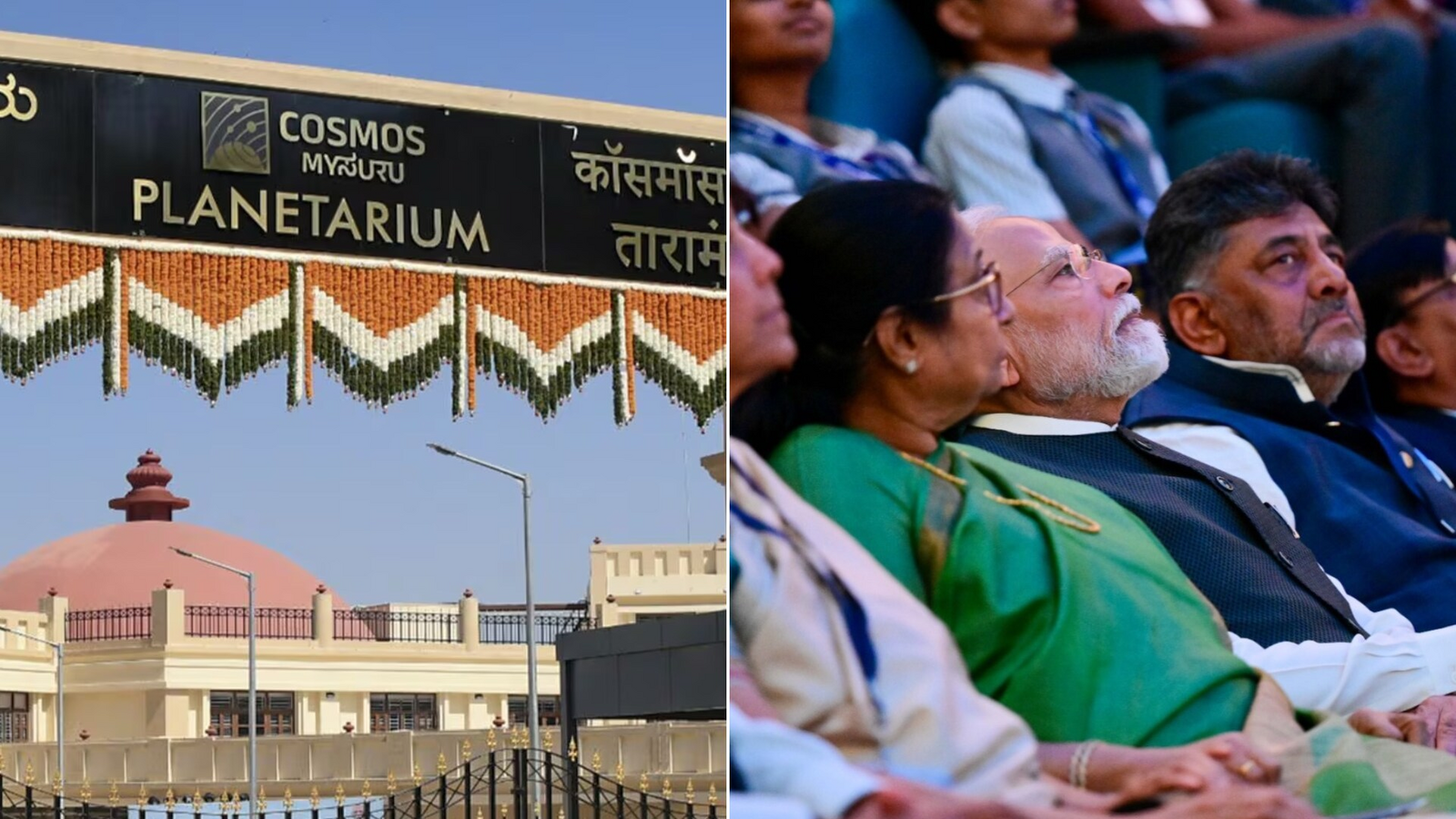
India's first LED dome planetarium, COSMOS-Mysuru, was inaugurated by Prime Minister Narendra Modi on 13 November at the University of Mysore campus in Karnataka. Developed by the Indian Institute of Astrophysics in collaboration with the University of Mysore, the facility sits near the foothills of Chamundi Hills and is designed to make astronomy easier to understand through immersive shows, science exhibitions and educational activities.
Its main attraction is a 15-metre LED dome that uses around 42 million LEDs across 6,150 panels to display visuals directly, rather than through projectors as in traditional planetariums. The 8K Ultra-HD display system and the dome, tilted at 15 degrees, are intended to give visitors a more immersive view of stars, planets and galaxies. The Sky Theatre will screen professionally produced astronomy programmes planned in Kannada, English and Hindi.
The larger facility includes indoor and outdoor science exhibitions, an astronomy museum, telescopes for viewing the Sun and stars, and classrooms, laboratories and lecture halls to support research, workshops and training. It will also connect visitors and students with astronomical data from observatories operated by the Indian Institute of Astrophysics.
The planetarium is located at the Jayachamarajendra campus of the University of Mysore. Mysuru Airport is the nearest airport but has limited flight connectivity; travellers can also fly to Kempegowda International Airport in Bengaluru and continue by road. Mysuru Junction is the main railway station, and the city is connected to Bengaluru through the Bengaluru-Mysuru Expressway, with local taxis and auto-rickshaws available for the onward journey.
Although the inauguration took place on 13 November, regular public screenings and ticket bookings are expected to begin only after final calibration and testing. The planetarium is expected to host two to three public shows daily once fully operational, with morning slots planned for school and college groups. Ticket prices, confirmed show timings and online booking details have not yet been officially announced, and visitors should check the Indian Institute of Astrophysics' official COSMOS website before travelling.