Satellite imagery indicates that villages have been removed and significant construction is under way in southeastern Tibet, more than a year after China began building what is expected to be the world's largest hydropower project on the lower Yarlung Tsangpo River near the border with Arunachal Pradesh. The project, estimated to cost $168 billion, involves a multi-structure dam system and a tunnel across the Great U-Bend, where the river loops around Namcha Barwa mountain and enters India through Arunachal Pradesh. With an installed capacity of 60 GW, it would be three times that of China's Three Gorges Dam.
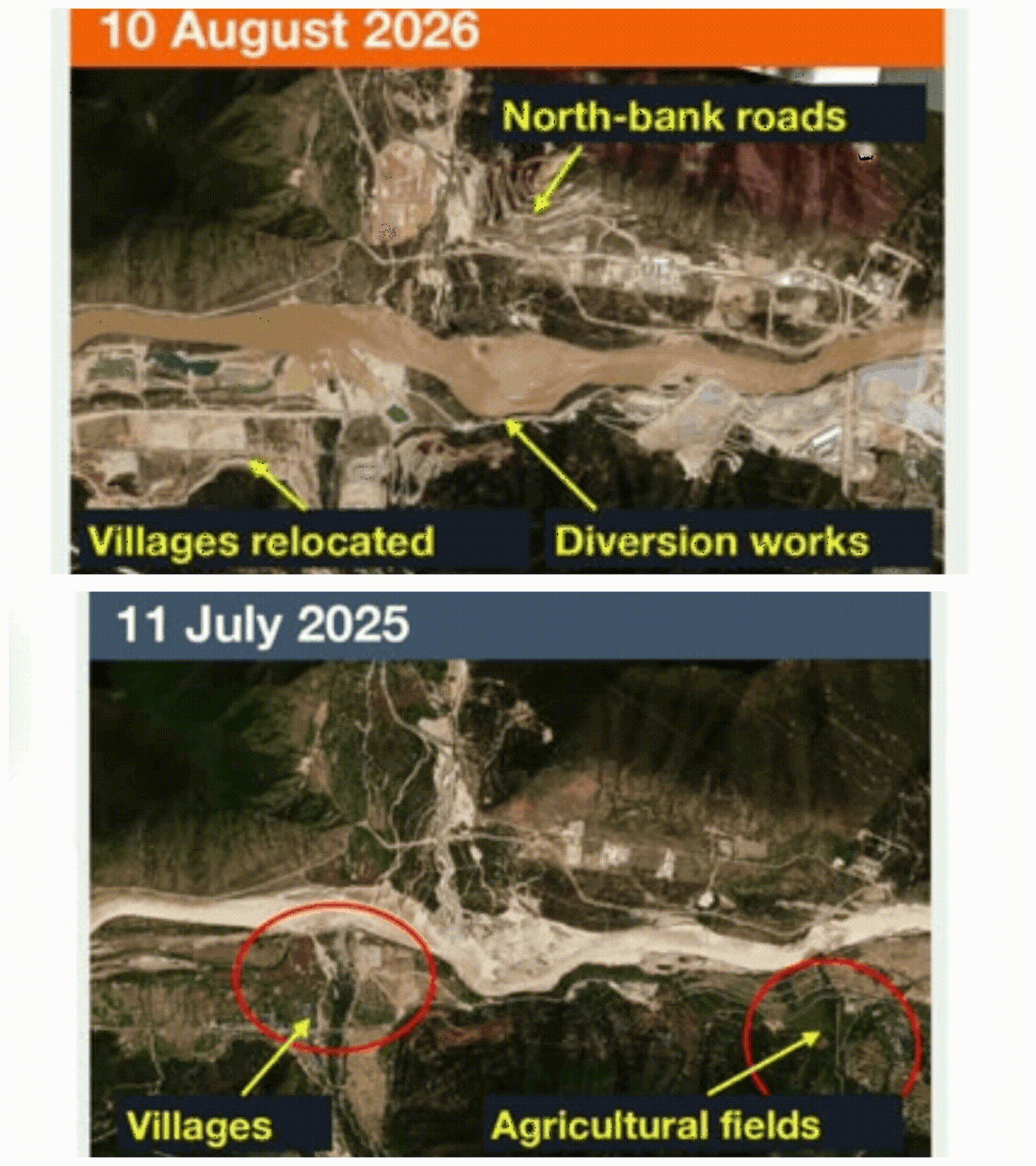
Nirdesh Sharma, CEO of geospatial AI startup Earthsense Labs, said the firm has been tracking construction activity from space for nearly two years. "The satellite imagery shows villages and farmland on the south bank of the river, upstream of the dam, being cleared," he said, as the company released its first report on the Medog Hydropower Project on Monday. Construction began in July last year.
According to the report, imagery of the Mainling high dam site taken last July, before the groundbreaking ceremony on July 25, showed villages and agricultural fields on the south bank. By December, the villages had been cleared, fields removed and earthwork started. Imagery of the north bank from August this year showed road construction, river diversion works, and offices and other buildings. The report also highlights a large dam near Mainling town, a lower dam near Pai town, a tunnel through Namcha Barwa mountain, and a water outlet near the India-China border downstream of Medog county.
Meanwhile, India is planning the 11,200 MW Siang Upper Multipurpose Project in Arunachal Pradesh to offset the impact of China's dam and changes in the river's discharge. A section of residents opposes it, citing threats to lives and livelihoods. Union Home Minister Amit Shah said last week during a visit to Arunachal Pradesh that all concerns would be addressed before the project proceeds. Efforts to contact the Arunachal Pradesh government and representatives of organisations opposed to the SUMP for their responses were unsuccessful.