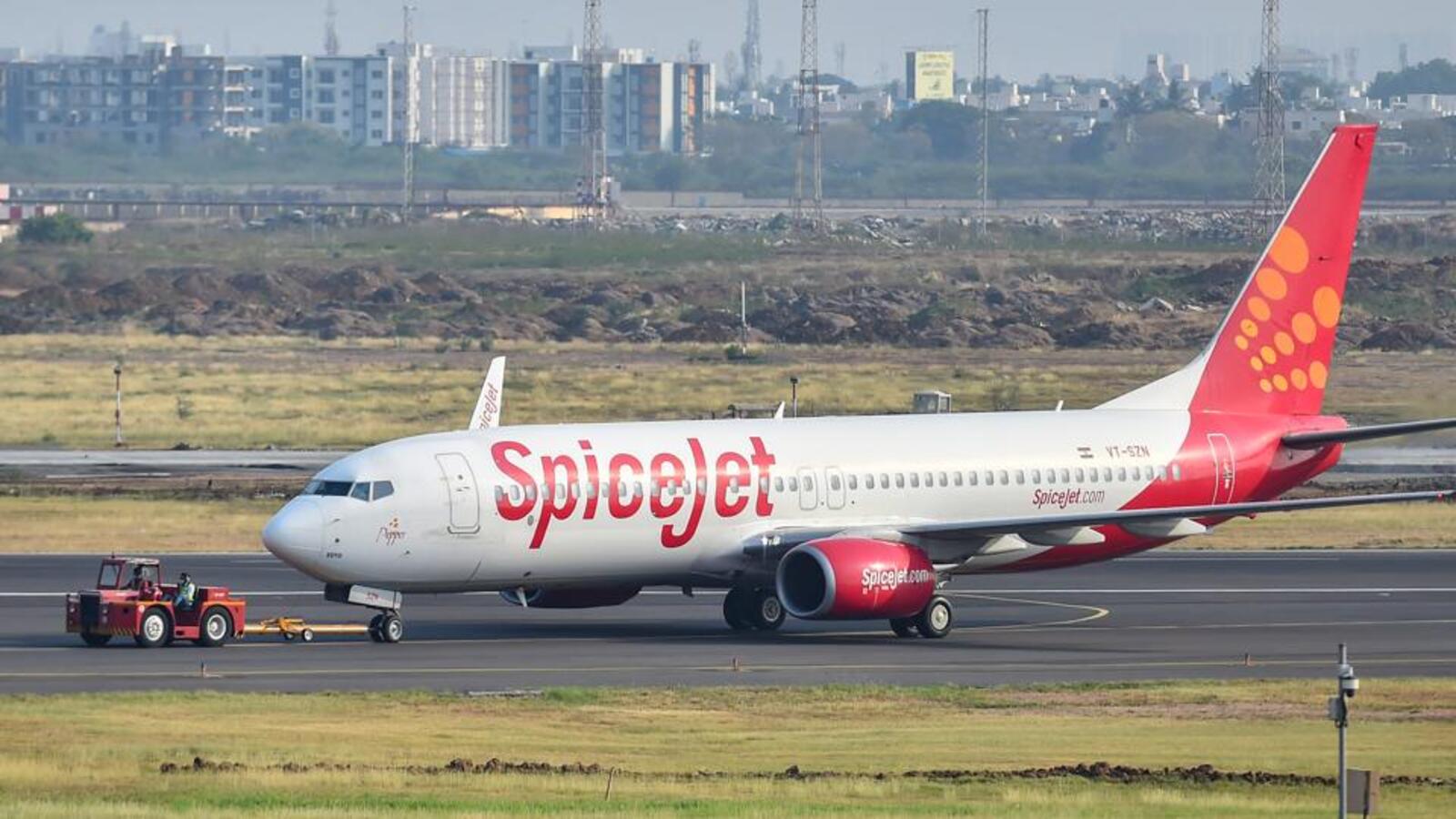
Financial turmoil at budget carrier SpiceJet and the resulting disruption to its international schedule have drawn attention to a little-noticed global aviation rule: the "use it or lose it" norm governing takeoff and landing slots at congested airports. Under international guidelines known as the 80/20 rule, an airline must operate at least 80% of its allocated slots during a scheduling season to retain historical rights to those timings in the same season the following year. Falling short of that threshold risks forfeiting unused slots to a central pool for reassignment.
For the current winter season, which runs from October 25 to March 27, SpiceJet secured slots at overseas hubs including Dubai and Sharjah in the United Arab Emirates, and Bangkok and Phuket in Thailand. The carrier reportedly holds weekly seat entitlements of about 14,000 in each direction to Dubai, along with rights for at least five weekly flights to Sharjah and seven to Thailand.
According to Ministry of Civil Aviation guidelines, an airport slot is permission from a coordinator to use the full range of airport infrastructure, such as runways, terminals, gates and aircraft parking stands, to arrive or depart at a specific date and time at congested Level 3 airports. Under the Worldwide Airport Slot Guidelines, airports are classified into three levels based on demand and infrastructure capacity. Level 1 airports have sufficient capacity and do not require formal slot allocation; Level 2 airports face potential congestion during peak periods and are generally managed through voluntary schedule adjustments; and Level 3 airports have severe capacity constraints and require an independent coordinator to allocate slots.
Airlines do not own these slots outright. At Level 3 airports, which include New Delhi, Mumbai, Chennai and Kolkata in India, alongside major global hubs such as London Heathrow, Amsterdam Schiphol, Frankfurt, Dubai International, Tokyo Haneda, Hong Kong International and Sydney, coordinators assess available runway and airspace capacity before weighing historical usage, carrier requests and applications from new entrants. In India, airport operators appoint coordinators under civil aviation guidelines, in coordination with the Directorate General of Civil Aviation.
Under the 80/20 rule, an airline must operate a series of slots at least 80% of the time during a scheduling season to retain those slots in the equivalent season the following year. If it fails to meet the threshold, the slots can be returned to the pool for reallocation. Slots returned to the pool, along with newly available slots, are allocated in accordance with applicable guidelines. Under the WASG, 50% of the available pool is to be allocated to new entrants, provided there is sufficient demand from them, while the remaining 50% is available to other airlines. Airlines may also exchange or transfer slots, subject to applicable rules and the coordinator's approval.
The slots are considered so precious that globally, airlines have even been known to fly empty planes, also called ghost flights, during the Covid pandemic to retain their slots. As a temporary arrangement, if an airline cannot profitably fly a slot right now, it may ask another airline to act as a baby-sitter for those slots to meet the utilisation threshold. Slot babysitting is a practice where a carrier temporarily leases or uses a valuable takeoff or landing slot at a congested airport, often with minimal or "ghost" flights, so another airline can keep its "grandfather rights". In the winter of 2021-2022, for instance, Greenpeace European Unit estimated that airlines operated about 100,000 ghost flights across Europe so that they would not lose their airport slots. Europe eventually relaxed the 80% rule to 50% during the pandemic.
SpiceJet's fleet has shrunk to about 12 aircraft, with only seven operational, according to PlaneSpotters.net as on November 24. Its share of India's domestic market fell to 0.6% in September from 3.9% in January, as monthly domestic passenger volume dropped to roughly 73,000 from nearly 592,000. On November 17, the DGCA issued a notice to the airline, warning that most of its fleet remained grounded and that the carrier had failed to submit a credible plan to return the planes to service. For an airline grappling with financial and operational difficulties, the consequences of cancelled flights can extend beyond immediate revenue losses. Falling below the required utilisation threshold could mean losing prized arrival and departure rights.