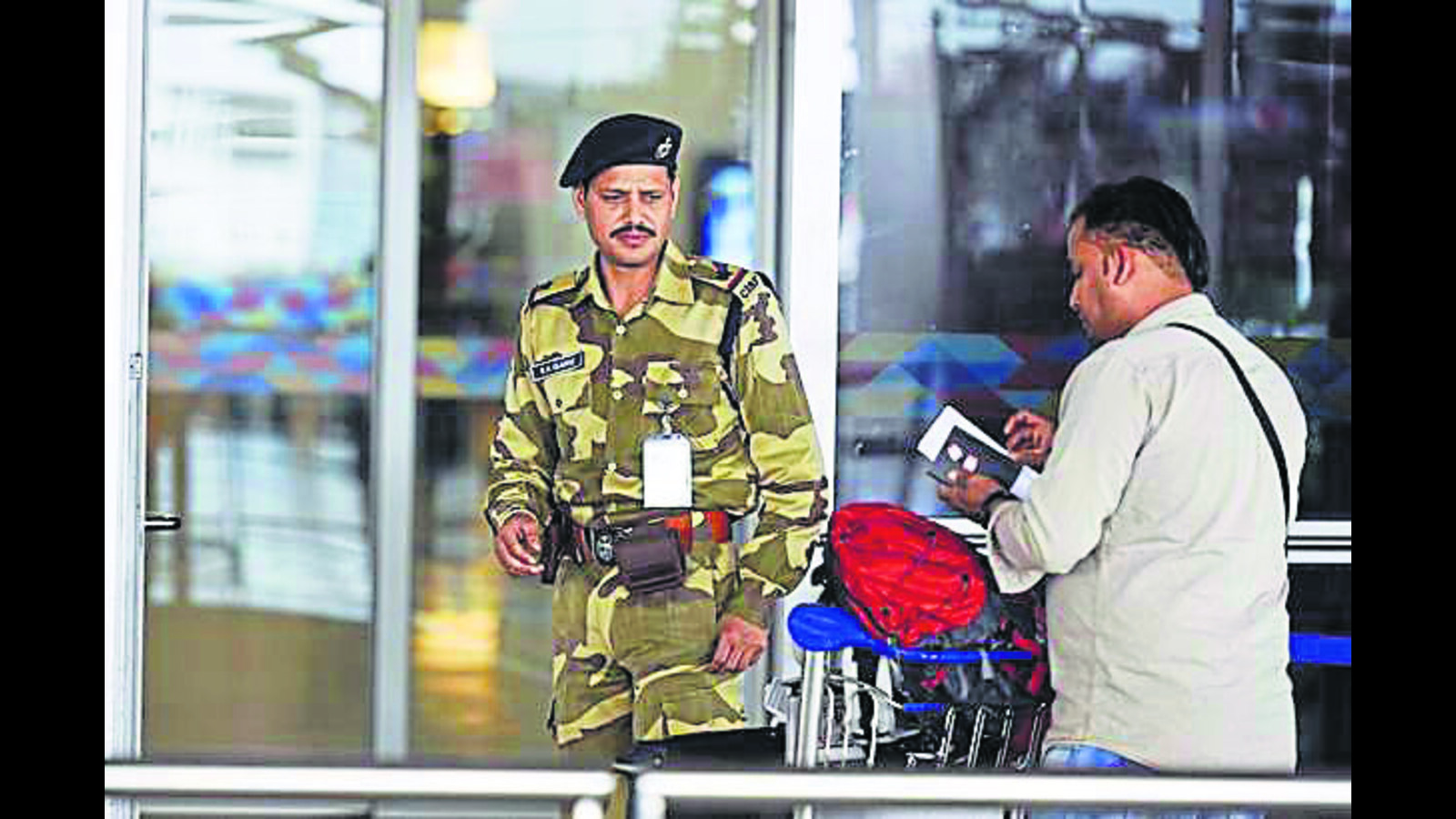
The number of Central Industrial Security Force (CISF) personnel posted at airport terminals across the country is likely to come down, with private security agencies gradually taking over duties that do not require armed personnel, according to new airport security norms circulated by the Bureau of Civil Aviation Security (BCAS). The plan, approved by the Ministry of Civil Aviation (MoCA) and shared with stakeholders through an October 27 BCAS order, rationalises deployment by limiting CISF presence at certain duty points, and the redeployment will be carried out in phases, officials said on condition of anonymity. The norms were framed after a year of surveys involving airport operators, the Intelligence Bureau (IB), the CISF, and the Home and Civil Aviation ministries, a civil aviation ministry official said.
The revised norms retain the CISF's responsibilities at critical security locations, including armed protection, perimeter security, mobile patrolling, surveillance and intelligence, quick response teams and other sensitive installations. MoCA did not respond to a query on the matter. A second official said the exercise is aimed at keeping security expenditure under control and avoiding an increase in the Passenger Service Fee (PSF), from which the cost of CISF deployment is met, at a time when demand is lower, airfares remain high and airlines face financial pressure due to elevated fuel costs.
The norms prescribe manpower requirements across security functions, including guarding terminal buildings, access control at departure and arrival gates, passenger screening and frisking, with separate provisions for DigiYatra lanes, vehicle access gates depending on whether they have X-ray baggage inspection systems, and cargo access control. Of 119 airports, the CISF guards 74 and state police 45, and the revised norms prescribe a reserve of 28% for CISF and 14% for state police personnel, with supervisory requirements based on manpower bands. Airports have been divided into small, medium and major categories based on passenger traffic and flight operations.
All airports and BCAS regional teams will conduct airport-specific manpower surveys for their total security staff requirements by the month end, and the final numbers will be sent to MoCA for review and the Ministry of Home Affairs for final approval, an official said. The extent of any reduction will become clearer once the surveys are completed and could vary across airports, possibly around 10% or more, another official said. On concerns about the training and accountability of private security personnel, an official said they work under the CISF's Chief Airport Security Officer and are trained and managed by the CISF in all aspects.