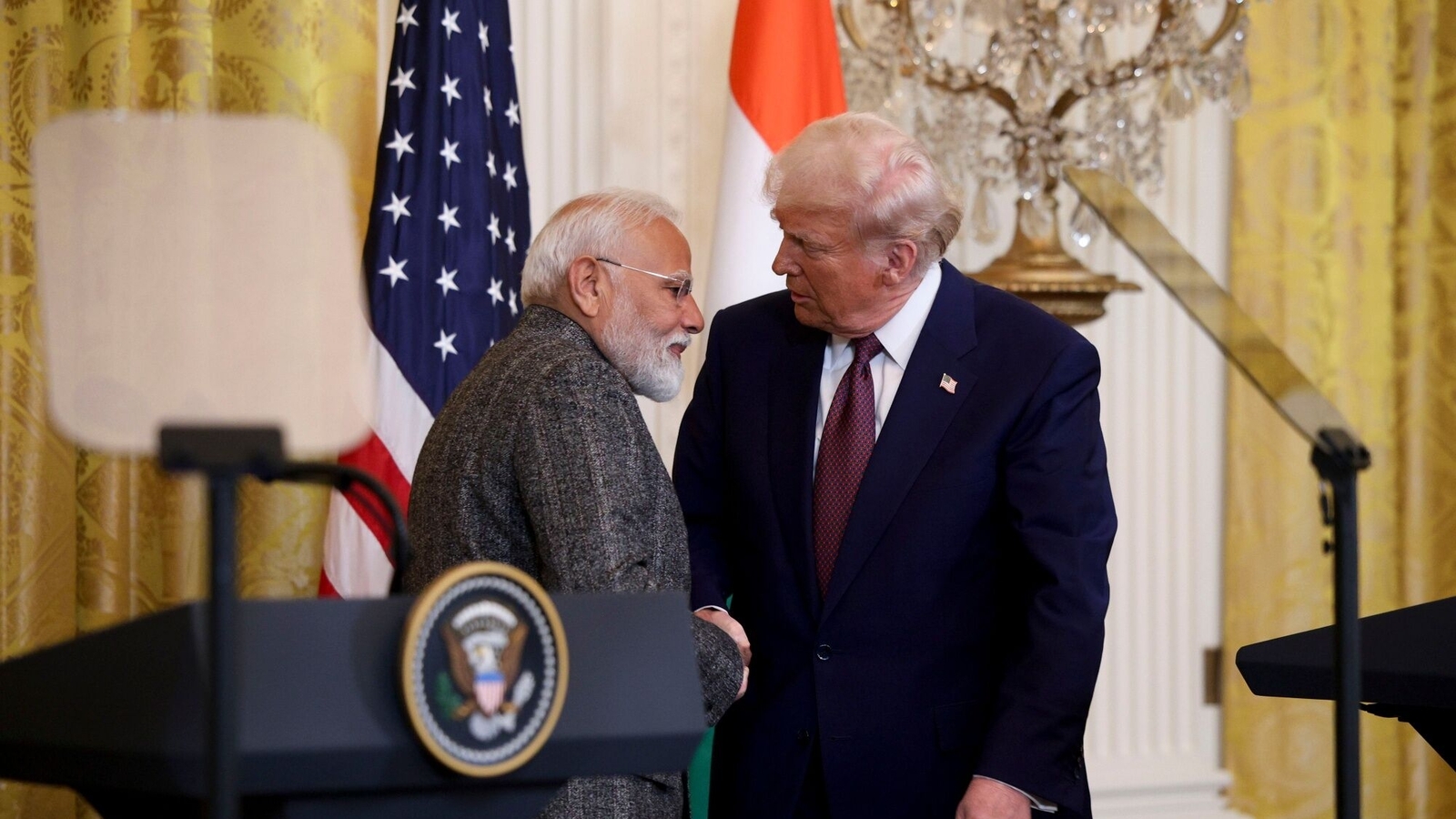
The United States on Wednesday proposed a tariff of up to 25 per cent on Indian goods, according to the Office of the US Trade Representative, which said the rate would be reduced to 17 per cent if New Delhi strikes a trade deal with Washington. The proposal comes amid strained India-US trade ties since April 2025.
The tariff trajectory began on April 2, 2025, when US President Donald Trump announced his "Liberation Day" exercise, revising rates for all trading partners. India was assigned a 26 per cent tariff, comprising a 10 per cent baseline and a 16 per cent reciprocal duty, with the administration citing India as a "maharaja of tariffs." The reciprocal portion was suspended for 90 days until July 9, 2025, while the baseline duty remained. After the deadline, a revised 25 per cent rate was announced on July 31, 2025, effective August 7. In August, an additional 25 per cent was imposed as a penalty for buying Russian crude oil, taking the total to 50 per cent.
On February 2, 2026, India and the US announced a framework for a bilateral trade deal, under which the tariff would be reduced to 18 per cent and the additional 25 per cent removed. Later in February, the US Supreme Court ruled that the International Emergency Economic Powers Act does not give Trump the authority to unilaterally impose tariffs, invalidating the "Liberation Day" and emergency-power tariffs. Trump then imposed a fresh 10 per cent tariff worldwide for 150 days under Section 122 of the Trade Act of 1974. After it expired in July, the administration turned to Section 301 and imposed a 10 per cent tariff on India, citing concerns related to "forced labour." In September, Trump signed the Sanctioning Russia and Iran Act, giving him authority to impose tariffs of up to 100 per cent on countries buying Russian oil and gas, including China and India; in October, he waived these taxes citing US national interest.
Under the Section 301 investigation into excess capacity, the US has now proposed 25 per cent, which could reduce to 17 per cent if a trade deal is struck. The new duty will not be added to the 10 per cent tariff Indian exporters have paid since the July investigation into allegations of forced labour. India said it was examining the USTR notice and reiterated that the country does not have structural excess capacity in any sector. The new rate comes as the two countries are yet to sign their trade deal, with Union commerce and industry minister Piyush Goyal, US ambassador to India Sergio Gor and Secretary of State Marco Rubio stating that the final one per cent is left for negotiations.