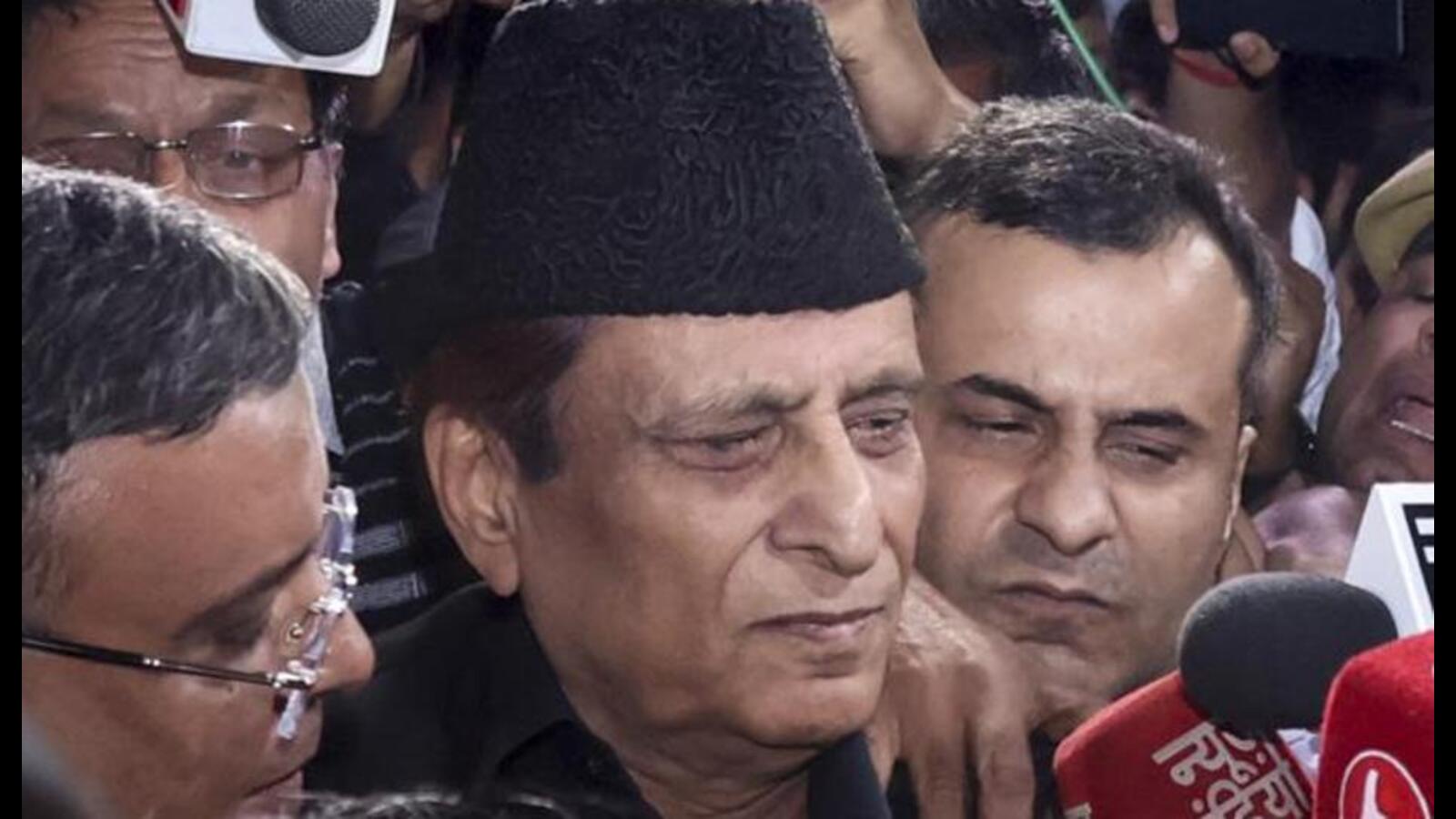
The Supreme Court on Thursday declined to interfere with the interim bail granted to Samajwadi Party leader Azam Khan by the Allahabad High Court in a money laundering case, refusing the Enforcement Directorate's plea to stay the order. A bench of Justices MM Sundresh and Prasanna B Varale made clear that observations made while granting interim bail would not affect the final decision in the matter.
Additional solicitor general SV Raju, appearing for the ED, sought to challenge the high court's findings on the circumstances of Khan's arrest, maintaining that the agency had furnished the grounds of arrest, which Khan refused to accept, and that video footage and a panchnama supported its version. He also flagged what he described as incorrect recording of certain facts in the high court order. The bench said it could not attribute motive to the court and stated it was not inclined to grant the ED's request, noting that the views expressed by the high court prima facie would have no bearing on the final outcome. Senior counsel Kapil Sibal appeared for Khan.
Khan, 78, walked out of Ghaziabad's Dasna jail on Wednesday evening, hours after the Supreme Court, in a separate mentioning before Chief Justice of India Surya Kant, refused to stall his release while agreeing to hear the ED's challenge. When the agency sought a direction to maintain status quo until Thursday, the court remarked that he could remain on interim bail and that the heavens would not fall. His release is the latest turn in a prolonged cycle of arrests, convictions and bail in a spate of criminal cases; since 2019, around 90 cases have been registered against the veteran SP leader, ranging from alleged land grabbing and forgery to hate speech and misuse of power.
The Allahabad High Court granted Khan interim bail on Tuesday, prima facie finding that the ED had not strictly followed the safeguards governing arrest under Article 22(1) of the Constitution and Section 19 of the Prevention of Money Laundering Act. The bench of Justices Rajiv Gupta and Devendra Singh questioned the circumstances in which Khan was arrested on October 31, minutes after he walked out of Rampur district jail following bail in a separate forgery case, describing the timing as indicative of a motivated and mala fide exercise. The high court also noted that the ED failed to establish that the grounds of arrest and other relevant documents were furnished to Khan in writing before he was produced for remand, and said no video or photographs had been shown substantiating the agency's claim that he refused to accept the documents. The money laundering case originates from alleged financial irregularities involving the Maulana Mohammad Ali Jauhar Trust, founded and controlled by Khan, including alleged diversion of government funds, land acquisition irregularities and construction of the Mohammad Ali Jauhar University, of which he is the honorary chancellor.