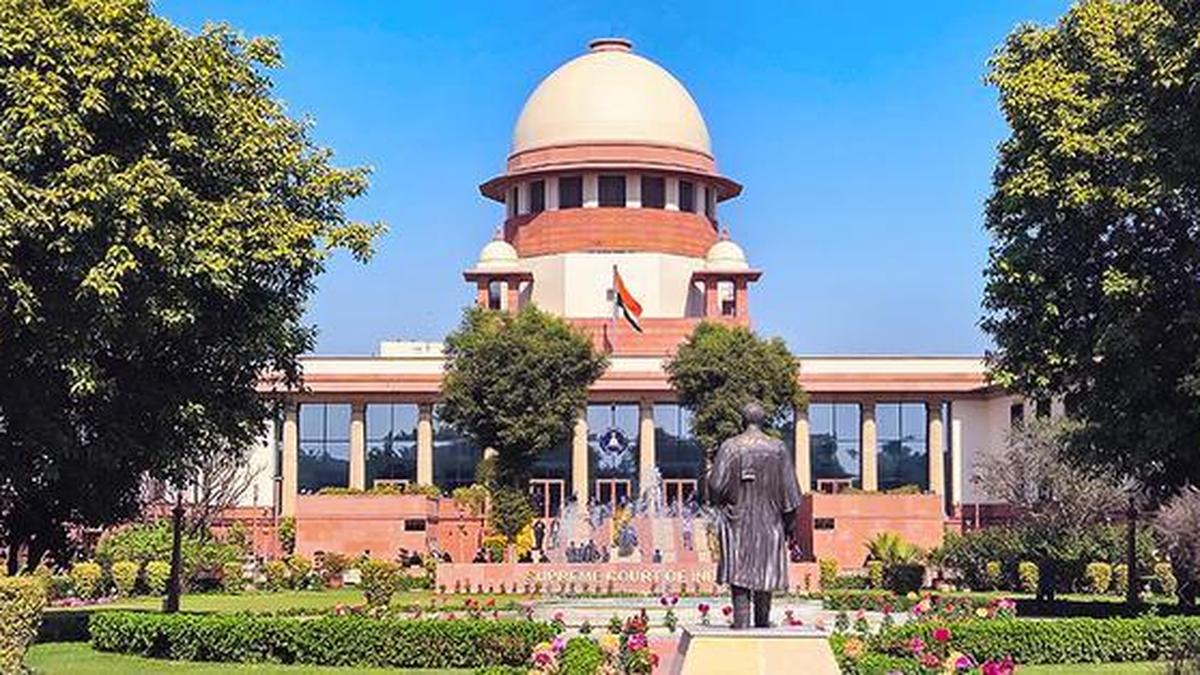
The Supreme Court on Monday sought responses from the Centre, the Election Commission of India and the Law Commission on a PIL seeking comprehensive reforms to the anti-defection framework. A bench comprising Chief Justice Surya Kant and Justices Joymalya Bagchi and V. Mohana also issued notices to the Ministries of Law and Justice and Parliamentary Affairs on the plea filed by A. Sethu.
The PIL raises concerns over the alleged misuse of resignations by elected representatives to circumvent disqualification proceedings and influence the survival of elected governments. Filed through lawyers R. Satish Kumar and Jatin, it seeks directions to prevent MPs and legislators from using what it terms "strategic resignations" to evade discipline under the Tenth Schedule to the Constitution.
The plea asks for time-bound, reasoned and transparent adjudication of resignations and disqualification proceedings, and for an institutional review of the Speaker-centred adjudicatory mechanism. It also urges that in a hung Legislative Assembly, the majority to form a government be tested only on the floor of a duly constituted House after members are sworn under Article 188, and not through extra-parliamentary letters of support or demonstrations.
According to the plea, legislators facing or anticipating disqualification proceedings frequently resign strategically before the Speaker or Chairman can decide the cases on merit, which can facilitate political realignments and alter the numerical strength of legislatures. It seeks a direction that such resignations not automatically terminate or render infructuous pending disqualification proceedings, and that the Speaker or Chairman record a reasoned order based on objective material on both the voluntariness and genuineness of the resignation and on the disqualification petition.