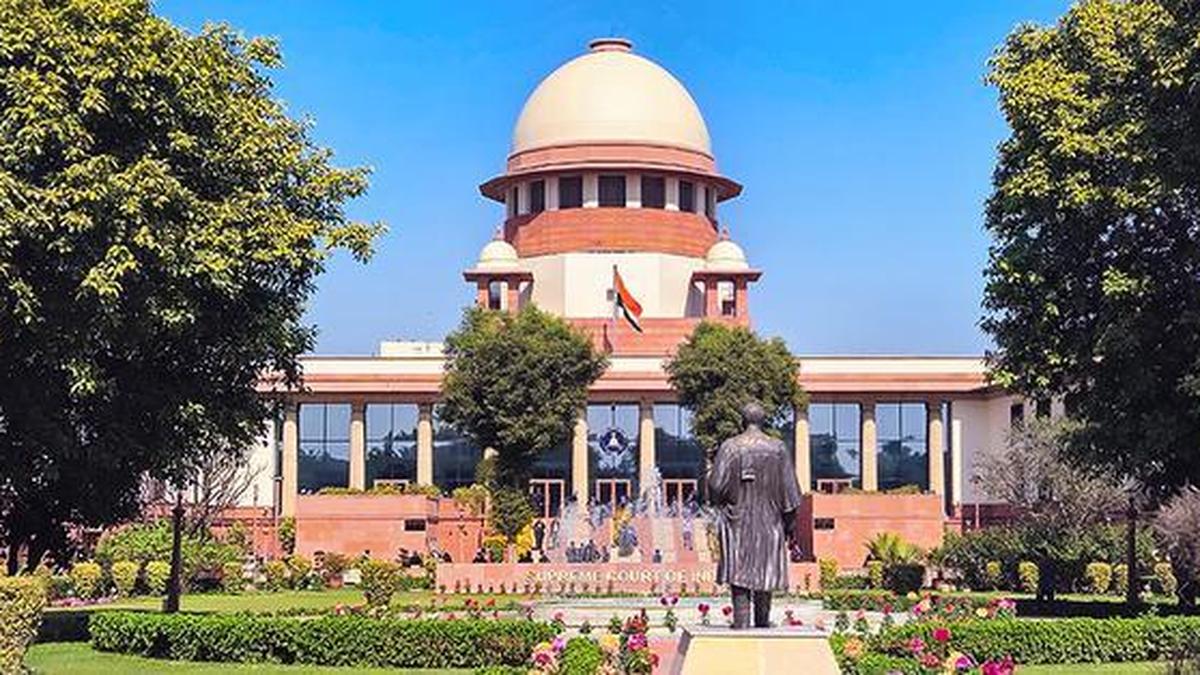
The Supreme Court on Monday (November 23, 2026) observed that unauthorised constructions often thrive with the "active connivance" of civic authorities, who hope State governments will regularise such structures, particularly before elections. A Bench of Justices B.V. Nagarathna and Sanjeev Sachdeva sought suggestions from States and Union Territories on tackling flagrant violations of building bye-laws.
The court described municipal inspection in cities as being "in shambles" and said inspections are often undertaken only after a building has come up and the violation has become a fait accompli, calling such checks "a sham." It also restrained municipal authorities from issuing directions contrary to its orders, warning that any interference could invite contempt proceedings.
The Bench noted the "practical difficulties" of monitoring building bye-law violations nationwide, observing that every State and Union Territory has its own laws and bye-laws. It said passing common orders for all States was neither practical nor feasible, and cautioned that sweeping directions could lead to chaos in the legal field, with private parties approaching the top court for relief and authorities using its orders against stays by tribunals or High Courts.
The court was hearing a case arising from Tamil Nadu concerning construction in violation of land-use norms and building bye-laws. It confined the proceedings to seeking suggestions from State governments on tackling flagrant violations and civic inaction, and directed parties to seek relief in individual cases before appropriate municipal authorities, tribunals or High Courts.