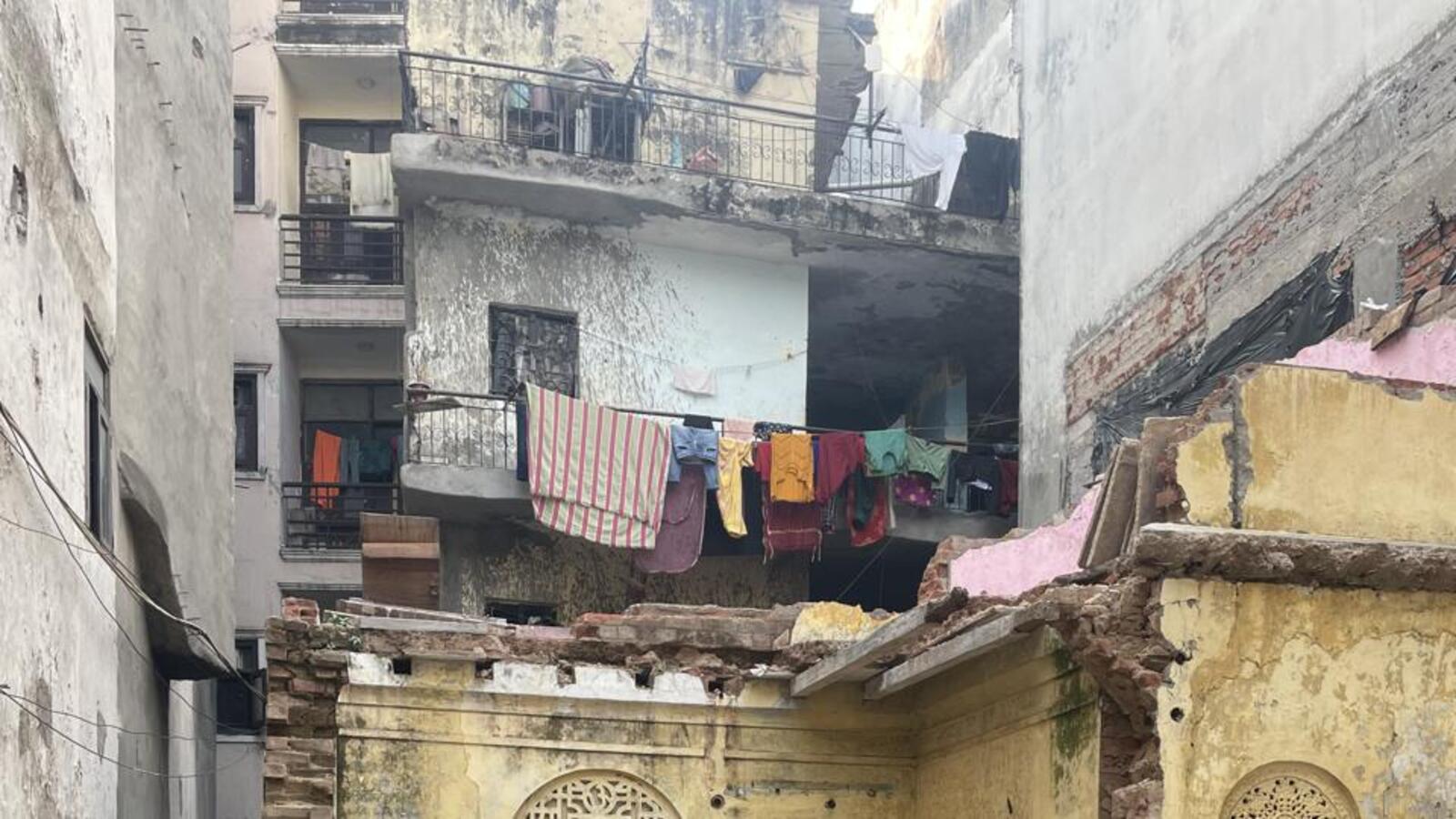
Students of a master's degree programme in urban studies at B R Ambedkar University, Delhi, will hold an off-campus exhibition, "Sanjha Saidulajab", on November 27 and 28, documenting the history of the south Delhi urban village, the lives of native communities and the experiences of migrant residents. The venue is the courtyard of a decades-old, partially demolished pale-yellow haveli, now surrounded by four to five-storey buildings.
The exhibition is part of Urban Studies Studio, an initiative launched by professor Shekhar Tokas, with professor Nidhi Tewatia overseeing the exhibitions. According to Tokas, earlier editions were held at the university's Karampura campus, and this time the initiative is being shared with the people and the village to which these stories belong. Previous editions divided students into teams focusing on cultural heritage, gender and caste; this year's exhibition also includes a team working on disaster assessment and risk, a decision taken following the building collapse in Saidulajab in May this year, which claimed the lives of six people, Tokas said.
A staircase and a narrow lane leading to the haveli will be transformed into a 300-metre heritage corridor, with murals on nearby walls depicting traditional doors and windows alongside modern building designs. A map of the village painted on the wall using red threads will depict the Lal Dora area, according to the organisers. Decades-old photographs collected from families, including wedding portraits, images of farmlands and funeral photographs, will be displayed along the corridor, said 26-year-old Atishay, a student involved in the exhibition.
Another student, 23-year-old Adwaitaiywa Pramanik, said the exhibition also aims to educate the migrant population about the locality, as many haveli owners have moved out and rented their properties. Anand Gulia, 48, a resident who moved from Gurugram a few years ago, said the two-storey haveli had been rented out until a few months ago, and that the owners moved to Saket around 25 years ago. Tenants were asked to vacate as the structure had weakened, and it was subsequently demolished, he said. The ruined remains now stand as one of the few old structures in the village, symbolising the city's transition, said Atishay.