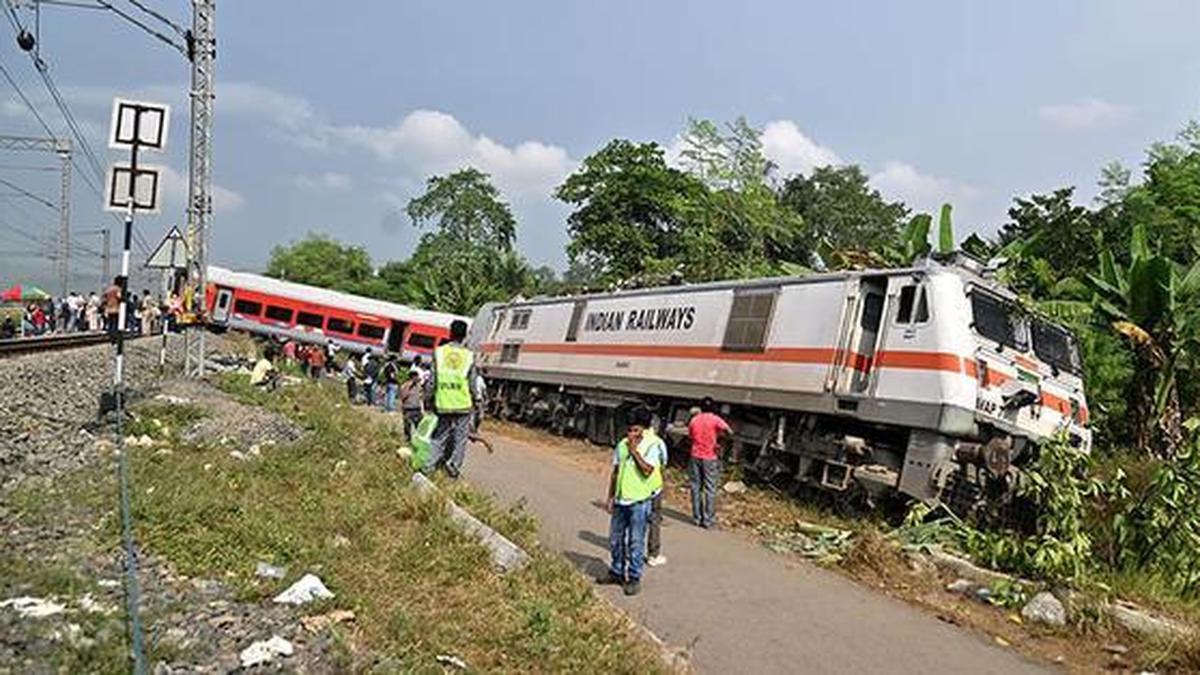
The Indian Railways has instructed loco pilots to verify that brakes are working effectively before accelerating trains from originating stations, according to railway sources. The advisory follows at least two incidents of trains running with brake failures in the past month — the derailment of the Kolkata-Sairang Express on a Northeast Frontier Railway line and the operation of an empty Vande Bharat rake in an unsafe manner on the South Eastern Railway.
Loco pilots taking charge of a train have reportedly been told to conduct a "Brake Feel Test" after departure once the train reaches 15 kmph, feeling the brake application until speed drops to 10 kmph before proceeding as per prescribed limits. They have also been directed to conduct a "Brake Power Test" after the train attains 60 to 70 kmph for passenger trains and 40 to 50 kmph for freight trains, observing brake application and brake power until speeds fall to 30 to 35 kmph and 20 to 25 kmph respectively. Assistant loco pilots were instructed to monitor and ensure the tests are carried out without fail and to assess the braking system's effectiveness.
Train 13125 Kolkata to Sairang Express derailed at Digaru railway station on the Northeast Frontier Railway on November 11, 2026. According to the loco pilot, the train, which had been diverted to the loop line, could not be controlled even after regular and emergency brakes were applied, and it hit the dead end, derailing five coaches.
In the second incident, on October 24, 2026, an empty rake of the Vande Bharat Express was allowed to run 463 km with poor braking power on the South Eastern Railway, sources said. A preliminary inquiry report sent by the South Eastern Railway headquarters to the Divisional Railway Manager, Ranchi, reportedly revealed failures by various staff, with the train operated depending solely on locomotive brakes and regenerative braking. Safety experts have raised questions about the quality of inspection and operational alertness, saying such exercises should not be conducted merely as routine formalities.