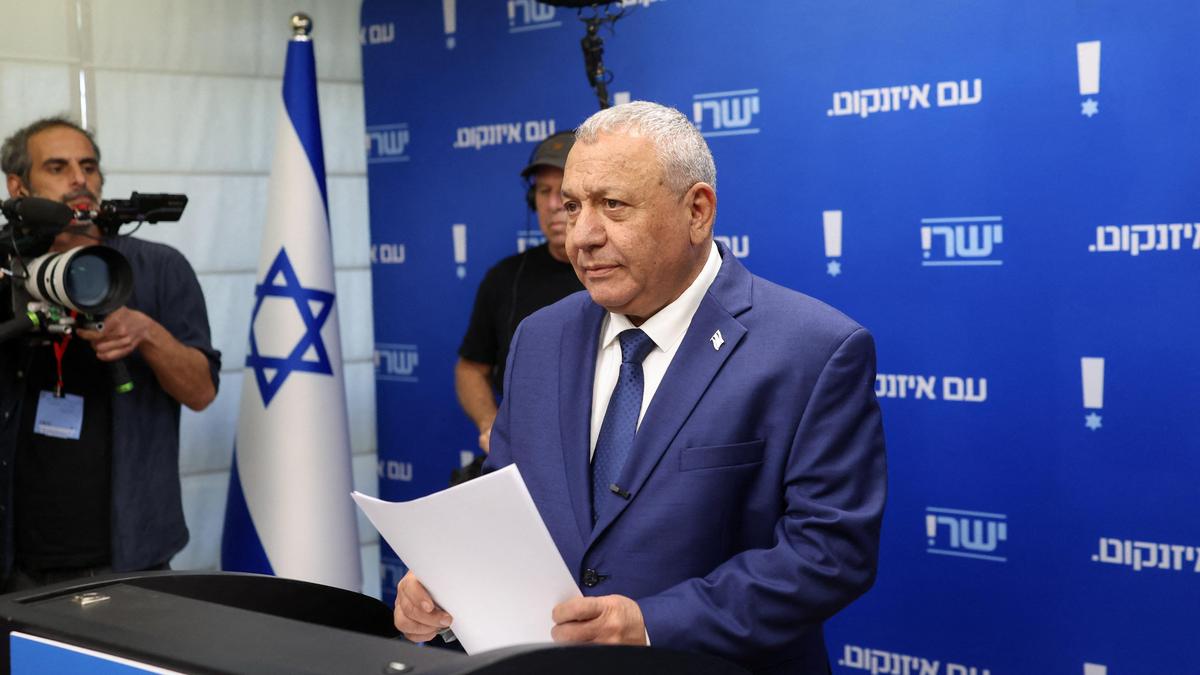
Delegations from Israeli caretaker Prime Minister Benjamin Netanyahu's Likud party and rival Gadi Eisenkot's Yashar party met for four hours in Herzliya on Sunday without reaching an agreement on a possible coalition government, the two sides said in a joint statement. A follow-up meeting will be held, they added, without giving a date or further details.
The talks follow a first round last Sunday. Eisenkot, a former army chief of staff, has until December 6 to form a government, with the possibility of a 14-day extension, after October elections failed to give either camp an absolute majority. His 48-member bloc needs 61 lawmakers for a majority and remains divided over whether to build a coalition with ultra-Orthodox parties, seek a rapprochement with Arab parties, or form a national unity government with Likud.
Netanyahu is pushing for a national unity government, which could include a rotation of the premiership between the two men. Such an arrangement could allow Netanyahu to retain political protection against the corruption charges he faces and continue to oppose an independent commission of inquiry into the security failures that preceded the Hamas attack of October 7, 2023. The prospect runs up against Eisenkot's refusal to serve in a cabinet led by Netanyahu, against whom he centred his campaign. His ally Naftali Bennett, a former prime minister, reiterated on Saturday his refusal to join a coalition with "Netanyahu or his bloc, under any circumstances".
On Saturday, Yashar described the resumption of talks as "a genuine commitment to forming the broadest possible government". Likud laid down conditions for its participation in a unity government, including an end to "all personal attacks and incitement to hatred" targeting Netanyahu and his government, and bringing together "all the parties that support the existence of the State of Israel as the nation-state of the Jewish people", without Arab parties. It is also demanding agreement on rejecting the creation of a Palestinian state, maintaining Israeli control over territories in Syria, Lebanon and the Gaza Strip, and a compromise on conscription of ultra-Orthodox Jews. On Friday, Eisenkot warned he would not allow the talks to drag on, saying he was ready to submit an "emergency national government" to parliament.