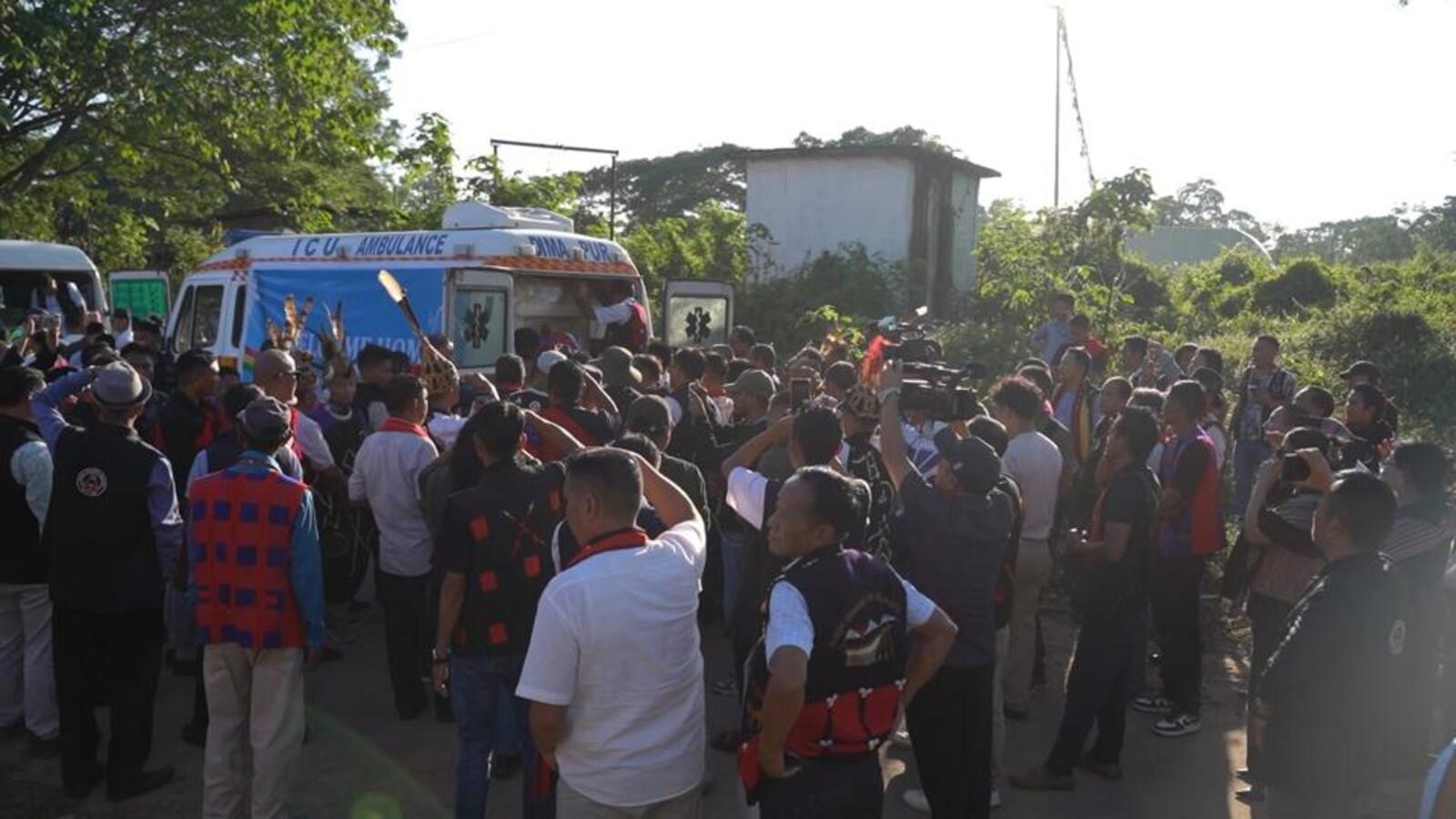
Thirty-nine Naga ancestral human remains, repatriated from the Pitt Rivers Museum in the United Kingdom after more than a century, arrived in Nagaland on Friday, according to the Forum for Naga Reconciliation (FNR). The remains were flown from New Delhi to Dimapur, where members of various Naga tribes in traditional attire received them and escorted them by road to Kohima. A formal public homecoming programme is scheduled for Saturday, followed by the burial of the remains on November 30.
The Oxford University Council in the UK recently transferred custodianship of the 39 remains, earlier held at the Pitt Rivers Museum, to the Naga people through the FNR and Naga tribal bodies. According to the FNR, collectors have donated Naga artefacts, including ancestral human remains, to the museum since its establishment in 1884. The repatriation was a six-year process.
"This is an important event for the Nagas. Over a century ago, British anthropologists took away our ancestral remains and kept them as objects of display in museums. Today they have been brought home to be given a dignified burial," said Rev. Dr Wati Aier, convener of the FNR.
NT Thamlong, vice-president of the Phom People's Council, said the occasion marks the beginning of a new journey towards self-healing among the Naga people in pursuit of unity and peace. The FNR and Naga tribal bodies described it as a solemn moment of closure and restoration. The 39 remains are believed to belong to members of eight Naga tribes — Phom, Konyak, Yimkhiung, Khiamniungan, Sümi, Pochury, Chang and Tangkhul.