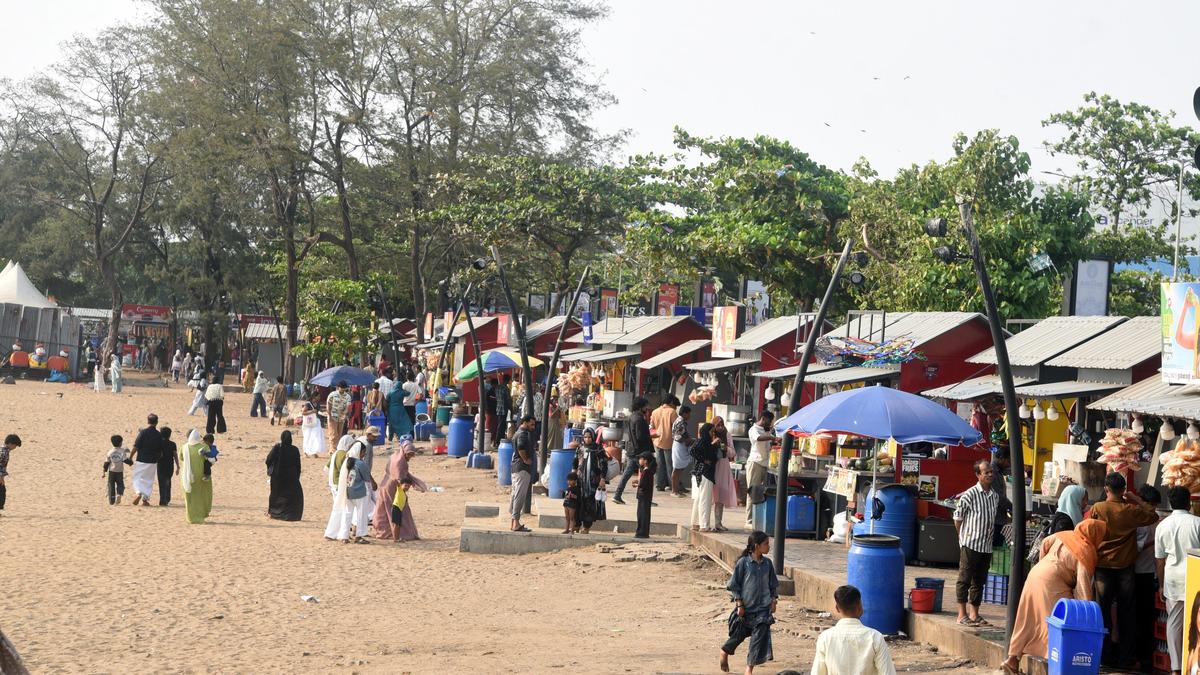
The Kozhikode Corporation Council decided on Monday to impose a total ban on cooking food at the vending zone on Kozhikode beach. Mayor O. Sadasivan told the meeting that cooking on the premises using multiple gas cylinders and large vessels, similar to hotel operations, would be discontinued by the end of this month. Vendors will still be allowed to sell food cooked elsewhere and brought to the vending zone. As permission has been granted only for the sale of tea and snacks, other food items will not be permitted, he said.
The Mayor said the Corporation had received information that some licence holders had sublet their stalls to others at higher rents, and that workers from outside the area had been brought in to run the stalls. To end such practices, the civic body has decided to issue identity cards this month to each licence holder and two other family members. Only those with identity cards will be permitted to operate stalls, and the Mayor warned that stalls would be shut down if the directive was violated.
Health Standing Committee chairman K. Rajeev said stalls operating in violation of the Street Vendors Act would not be allowed to continue. Around 20 stalls function in the vending zone, where three wastewater tanks have been installed, but the volume of wastewater generated exceeds their storage capacity, he pointed out. Notices have begun to be issued to stalls functioning illegally, he added.
On Monday evening, the civic body's health wing removed unauthorised temporary structures erected alongside a wayside food stall at the Kozhikode Beach Food Street. The drive was led by Health Officer-in-Charge K. Dileep Kumar. Officials said the stall, allotted to the vendor as a source of livelihood, had been illegally expanded, with the vendor found using LPG cylinders for cooking and engaging more workers than permitted. Additional seating had been set up using tarpaulin sheets. The health wing removed the unauthorised tarpaulin shed, an ice freezer, gas cylinders, cooking utensils and other materials to ensure the free movement of visitors to the beach.