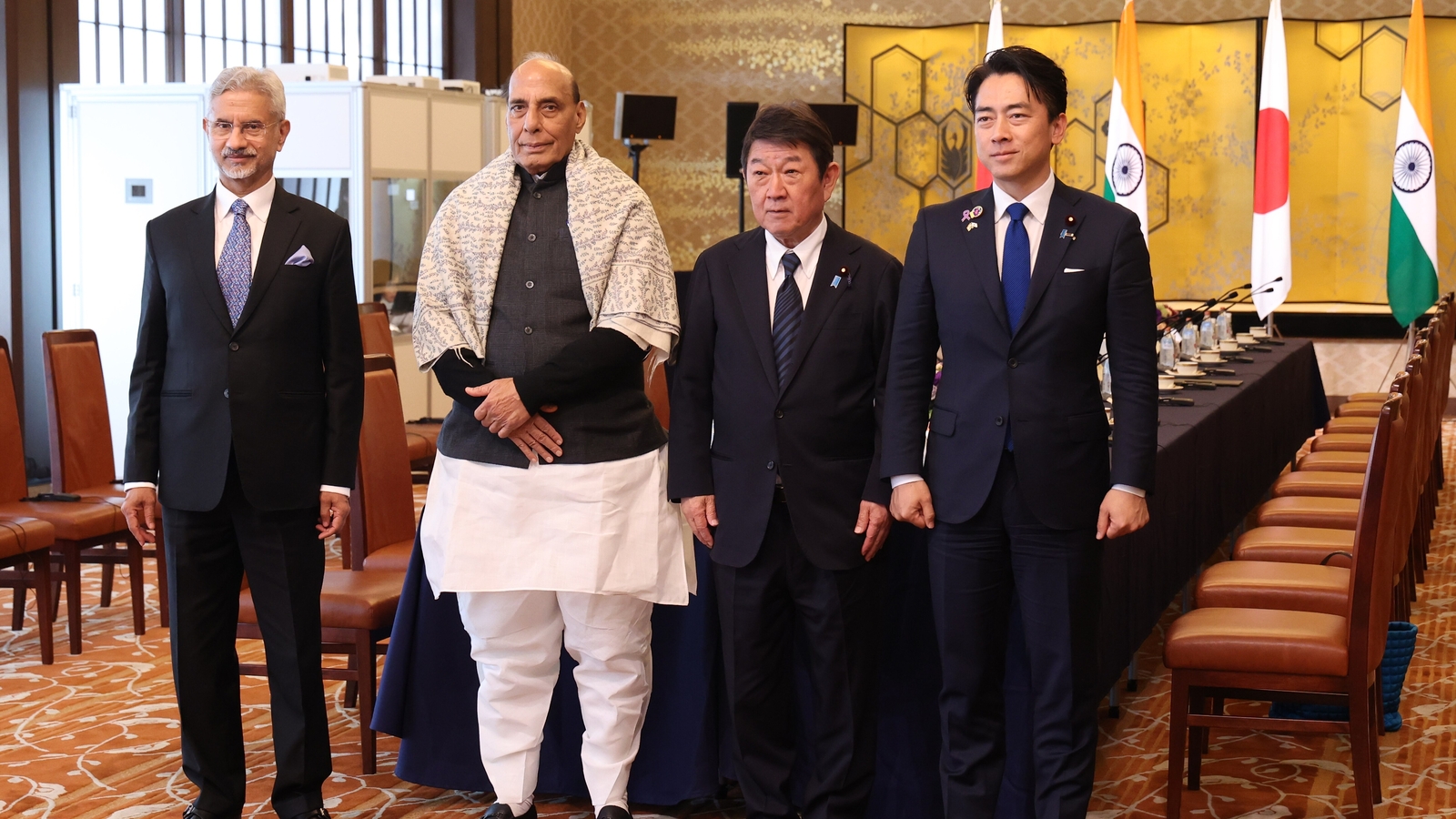
India and Japan agreed to deepen defence ties and maritime security cooperation following their 2+2 ministerial dialogue in Tokyo. External affairs minister S Jaishankar, Japanese foreign minister Toshimitsu Motegi, defence minister Rajnath Singh and his Japanese counterpart Shinjiro Koizumi addressed a joint press briefing after the meeting, stating that the two sides reviewed a wide range of bilateral and regional issues under their Special Strategic and Global Partnership.
Jaishankar said the two countries share a long history of friendship and goodwill, and that closer cooperation could play a greater role in shaping the global order. He said their cooperation seeks to support a multipolar Asia and a multipolar world, noting that both nations have been strong proponents of reformed multilateralism. He observed that the meeting took place as the global order faces multiple shocks, citing the conflicts in West Asia and Ukraine, the after-effects of the COVID-19 pandemic and resulting concerns over energy, trade, food and health security. He said old assumptions may no longer hold true and that each nation will have to contribute more to the global good, while flagging concerns over the rising tendency to weaponise connectivity, services, resources and market shares.
Jaishankar said ensuring smooth maritime trade is imperative and that maritime cooperation can make a difference, adding that the two sides agreed on the importance of adhering to international law. Rajnath Singh said the talks build on the Joint Declaration on Security Cooperation signed in August 2025, as both countries prepare to mark 75 years of diplomatic relations in 2027. He said the two sides advanced discussions on air and space domain awareness and agreed to quickly turn their recent Memorandum of Arrangement on maritime security into concrete action, besides seeking an early ship-repair arrangement. He also called for early conclusion of UNICORN-related agreements, India and Japan's first joint defence co-development and co-production project, and said cooperation would be accelerated in niche, underwater and missile technologies. The ministers also discussed regional and global developments and agreed that disputes should be settled peacefully in accordance with international law.