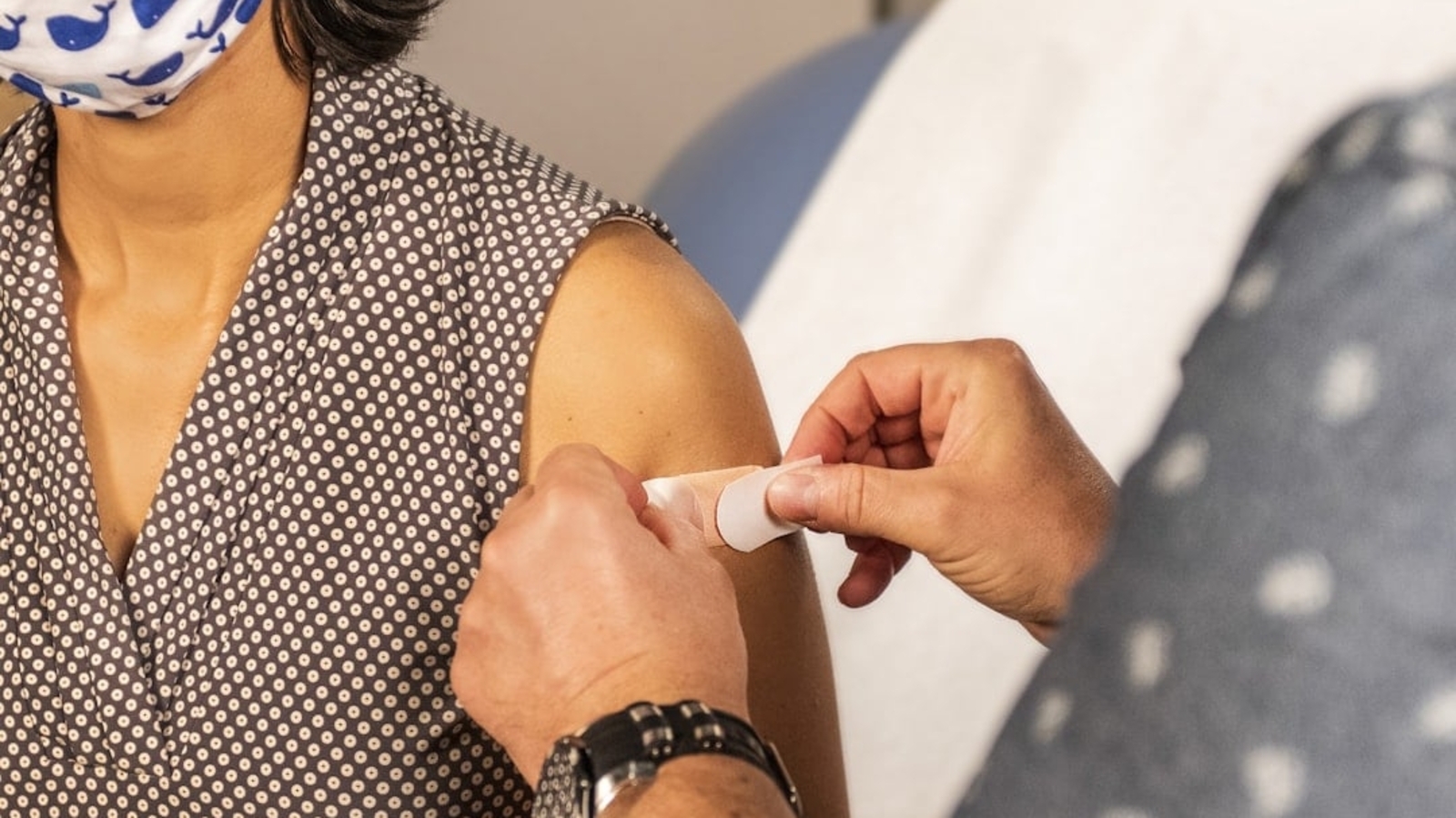
Prime Minister Narendra Modi on Monday described the administration of more than one crore doses under the National HPV Vaccination Campaign as a significant milestone in India's preventive healthcare efforts. In a post on X, he said every dose is a step towards protecting girls from cervical cancer and ensuring a healthier future for them, and commended all stakeholders whose efforts ensured the feat.
According to the Ministry of Health and Family Welfare, the one crore mark was crossed in less than nine months since the nationwide campaign was launched in February 2026. The campaign offers free, safe and voluntary single-dose HPV vaccination, with parental consent, to 14-year-old girls at government health facilities, aiming to protect adolescent girls against HPV infections that can cause cervical cancer. The Ministry said cumulative coverage stands at nearly 87 per cent of the identified annual target cohort of approximately 1.2 crore girls, based on Registrar General of India 2021 population estimates.
Union Health Minister Jagat Prakash Nadda also welcomed the achievement, highlighting the contribution of States and healthcare workers. In a post on X on Saturday, he congratulated Gujarat, Uttar Pradesh, Andhra Pradesh, Mizoram, Madhya Pradesh and Bihar for achieving 100 per cent coverage, with 12 States surpassing 80 per cent. According to the Ministry, Assam recorded 95.63 per cent coverage, Telangana 95.28 per cent, Karnataka 93.16 per cent and Uttarakhand 90.17 per cent, while Chhattisgarh stood at 86.21 per cent and Rajasthan at 85.23 per cent. Kerala reported 77.02 per cent, Tamil Nadu 76.12 per cent, Odisha 74.90 per cent and the Union Territory of Dadra and Nagar Haveli and Daman and Diu 72.99 per cent.
In absolute numbers, Uttar Pradesh leads with more than 29.33 lakh girls vaccinated, followed by Bihar with over 13.70 lakh and Gujarat with over 7.75 lakh. The Ministry said the progress across States with diverse geographical, demographic and socioeconomic conditions highlights the campaign's extensive reach and the effectiveness of locally adapted implementation strategies.