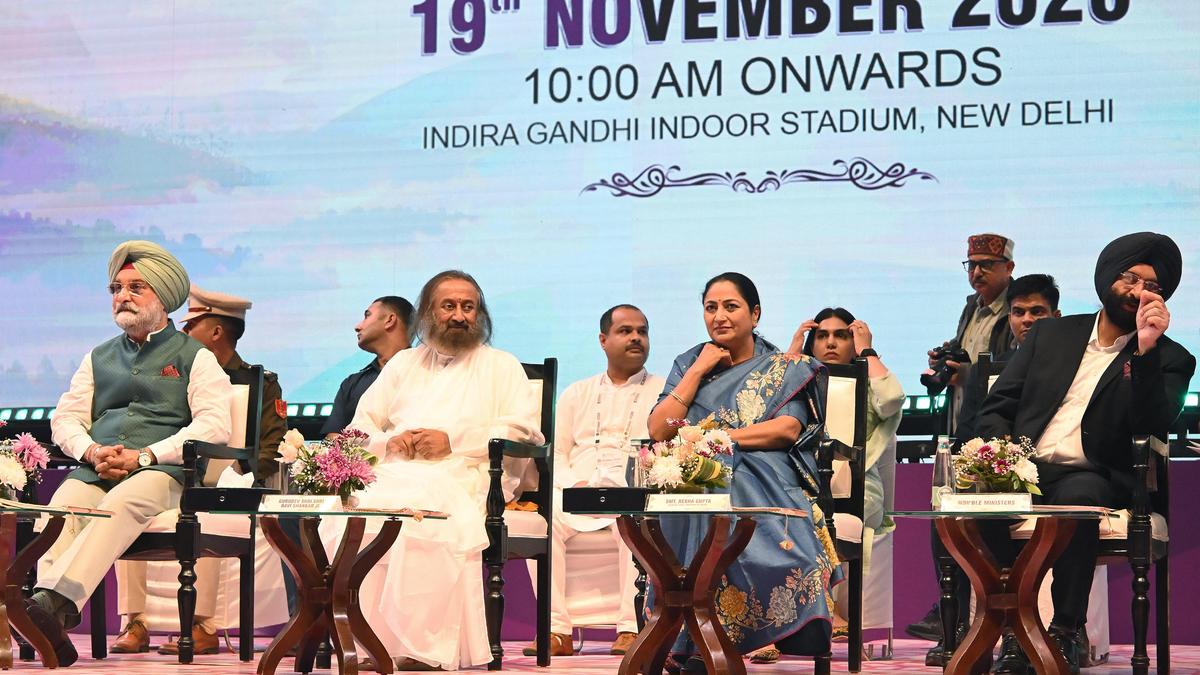
The Delhi Government on Thursday (November 19, 2026) launched the 'Ehsaas 2026' Mental Health and Well-Being Policy for schools and higher educational institutions in the national capital. The policy aims to ensure one counsellor for every 500 students, besides providing helplines and mental and emotional support services. Lieutenant-Governor Taranjit Singh Sandhu, Chief Minister Rekha Gupta, spiritual leader Sri Sri Ravi Shankar and Environment Minister Manjinder Singh Sirsa were present at the launch.
According to the Chief Minister's Office (CMO), the policy seeks to raise awareness about mental health and encourage students, teachers and parents to speak openly about the subject. Special attention will be given to examination pressure, academic stress, anxiety, depression, interpersonal relationships and challenges related to digital behaviour. It also provides for stress-management and social-emotional skills, while sensitising teachers and parents to recognise early signs of mental health concerns, and emphasises confidential mechanisms for reporting bullying, identity-based discrimination and cyberbullying, according to an official statement.
The Lieutenant-General said making mental health and emotional well-being an integral part of education was the need of the hour. Mr. Sandhu said, "Every child's feelings, aspirations and needs matter. No child should face discrimination on the basis of their background, abilities or circumstances." Chief Minister Rekha Gupta said the policy would be implemented across schools and higher educational institutions in Delhi, adding that the government wants every child to progress with happiness, positivity and confidence.
According to an official statement, the policy will have a six-tier escalation mechanism, including the class teacher, school counsellor, school head, District Well-Being Centre, hospital services and statutory agencies. Education Minister Ashish Sood said the government took up the issue after a school student attempted suicide a few days ago, and thanked the Art of Living, UNESCO, IHBAS and expert institutions for their contribution. The policy is based on four key pillars, including a "Whole-Institution Approach" and Proactive and Preventive Care, according to the CMO.