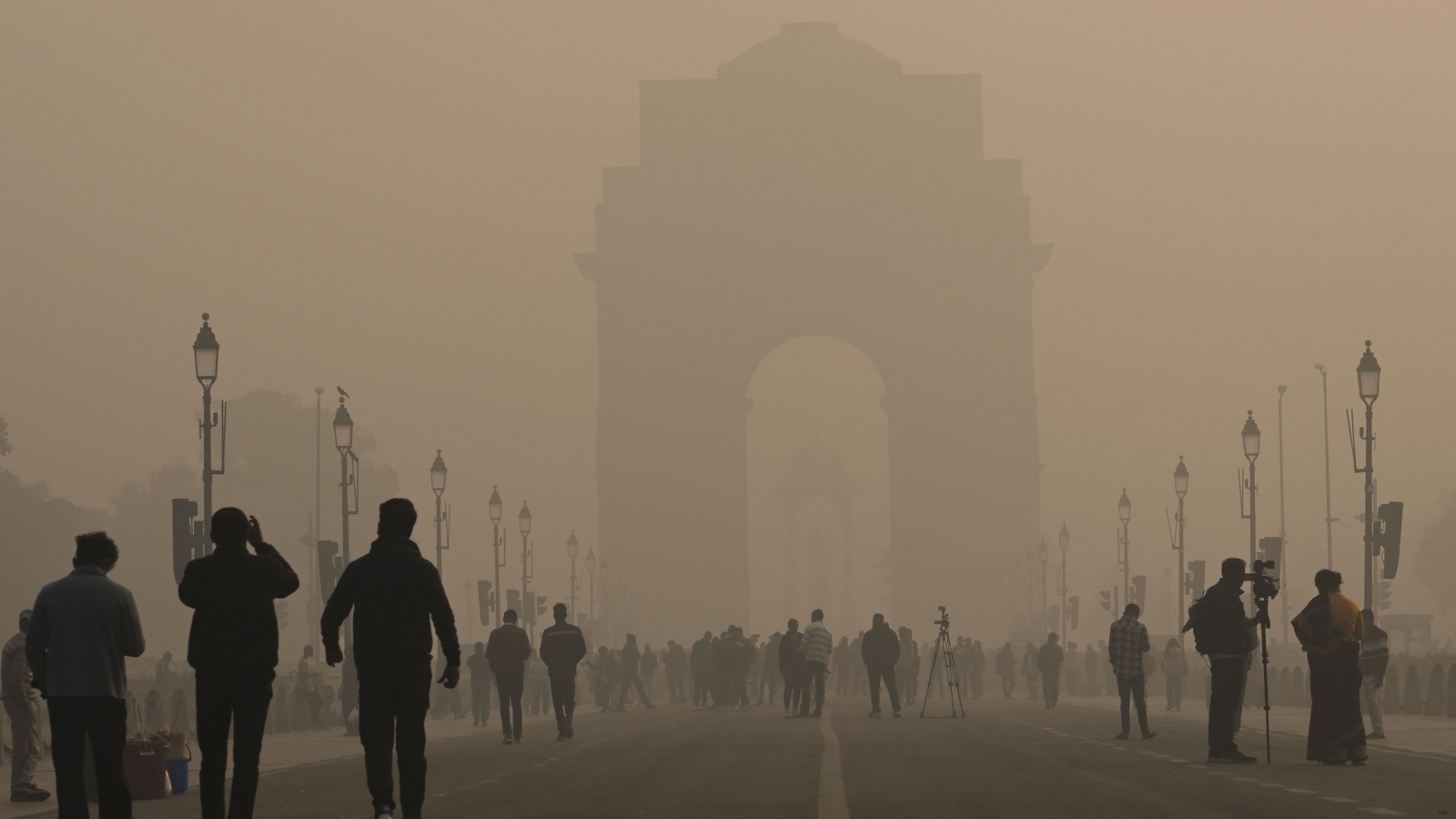
India's official air quality index may be underestimating how bad Delhi's air is on the most polluted days, according to CPCB documents and Delhi figures analysed by our team. The Central Pollution Control Board seemingly does not follow the index's own published definition when calculating it, the analysis found.
We ran the index's calculations on a year of hourly readings from Delhi government monitoring stations. Scored by the index's own definition, set out in at least four CPCB and government documents, the city would have been rated "severe" on 23 days — more than double the 10 reported in CPCB's daily 4pm bulletins. The gap is starkest on the most polluted days.
This November, our calculations show Delhi's air would have been "severe" on two days, while CPCB's bulletins have yet to call a single day "severe". No November since at least 2015 has gone without one, according to our analysis of the bulletins. The two days were Diwali, November 8, and the day after; CPCB called both "very poor". On November 9, the index should have been 411 instead of the 344 published. On that day, CPCB rated just one monitoring station "severe", where 29 would have been "severe" under the definition.
The index's definition requires each pollutant's readings to be averaged over 24 hours before conversion into a sub-index. CPCB's published figures for more than 500 stations elsewhere are averaged from hourly scores in the same way, our analysis found. CPCB's practice makes cleaner days look slightly worse, by less than 10 points, and ranked Delhi in a worse category on only two days in the year; the error is far larger, and runs the other way, on the most polluted days.