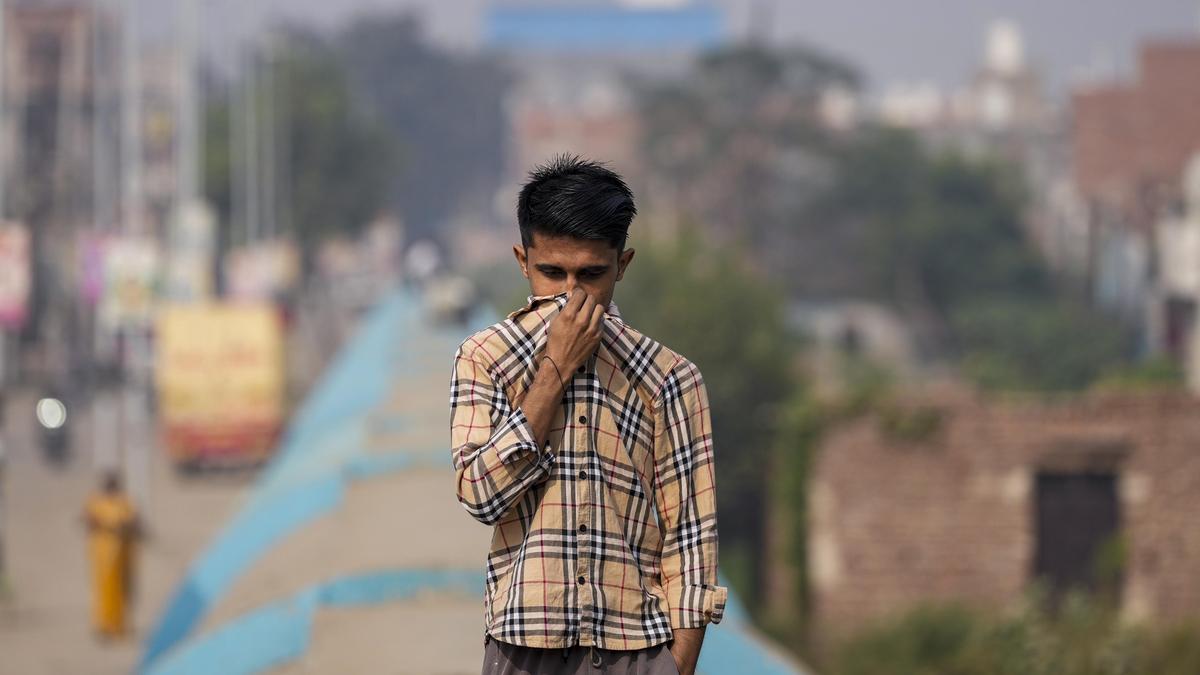
The Commission for Air Quality Management in NCR and Adjoining Areas (CAQM) has directed the Delhi government and NCR states to prepare comprehensive State Action Plans for 2027, including district-level action plans, to control air pollution across sectors. In a statement on Saturday, the CAQM said District-Level Action Plans are being formulated as an integral part of the State Action Plans for the first time, which will facilitate focused implementation of pollution control measures at the grassroots level, effective monitoring of progress, identification of implementation gaps and timely corrective action, with clearly defined accountability. Officials responsible for meeting the prescribed targets will also be identified by name and designation to establish clear ownership and accountability for implementation and outcomes.
The Commission said it will also specify additional measures and interventions to be incorporated into the action plans based on past experience and emerging requirements. States have been directed to define sector-wise actions, measurable targets, timelines and monitoring parameters, as in the current action plan. The proposed actions are to be designed to contribute towards an overall reduction of 15%-20% in annual average air pollution levels (AQI, PM2.5 and PM10) compared with 2026, through focused interventions across major pollution sources, including vehicular pollution, road dust, industrial emissions, construction and demolition activities, municipal solid waste management, crop residue management, diesel generator sets, crematoria and other local pollution sources.
The 2026 annual action plan is currently in force and the CAQM is monitoring its implementation. In September, it was reported that only about 40%-60% of the measures promised in the 2026 annual action plans had been completed by Delhi and districts in adjoining States, including Uttar Pradesh, Haryana, Rajasthan and Punjab, according to sources. The States had submitted the plans to the CAQM in January and they were finalised in February.
Separately, a private company demonstrated the use of drones to spray water to reduce air pollution for the Delhi government on Saturday. According to an official, a free demonstration was held at a railway construction site near CWG Village, where the drone was connected to a water tank on the ground and could spray water over the area. Further demonstrations will be conducted over seven days to assess its impact, the official said, adding that the technology is useful only in open areas.