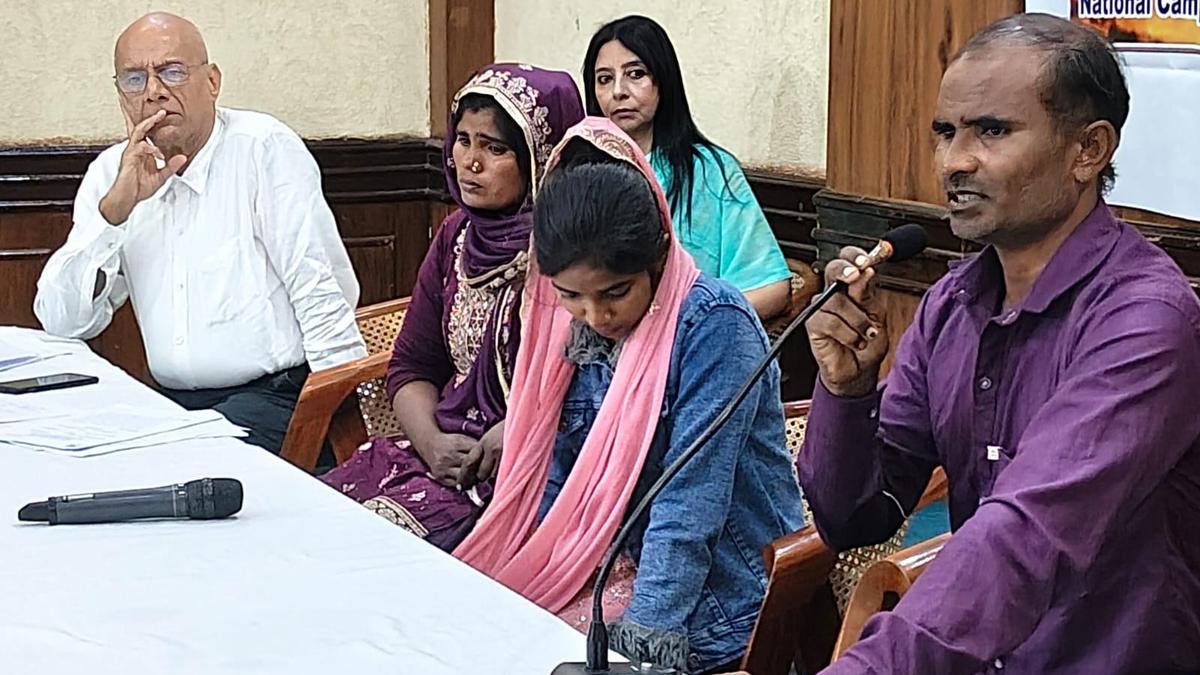
Bonded labourers rescued from exploitation are still waiting for release certificates and rehabilitation funds, despite a Supreme Court order directing that financial assistance be provided within seven days of a certificate being issued and rehabilitation begin within 90 days of rescue. The gap was highlighted at a conference at the Press Club in New Delhi on Thursday (November 19), where labourers from Telangana, Uttar Pradesh, Bihar and Maharashtra recounted being lured and forced to work without pay for months.
Among the cases discussed was that of Deepika (name changed), a 17-year-old from Jharkhand who came to Delhi seeking a livelihood. She was allegedly confined to private residences in Dwarka and Rohini, deprived of her phone and cut off from her family. Her lawyer, Vinod, said that despite repeated complaints of trafficking, child labour and possible sexual abuse, she was rescued only after a month, on October 27 from a residence in Rohini, and placed under the care of a Child Welfare Committee. No FIR has been registered so far. The Deputy Commissioner of Police, Dwarka, said the FIR will be registered once she tells the CWC about her trafficking and sexual abuse.
Ramayan, among 12 people trafficked from Chhattisgarh to a brick kiln in Telangana and rescued a week ago, alleged that officials took their thumb impressions on documents without explaining the contents, and that the kiln owner's associates assaulted and robbed them as they returned to Chhattisgarh. Senior advocate Colin Gonsalves said the practice persists despite being banned under the Bonded Labour System (Abolition) Act, 1976, and that governments and law enforcement agencies have failed to act.
Nirmal Gorana, convenor of the National Campaign Committee for Eradication of Bonded Labour, said the Supreme Court's November 2 judgment, by a Bench of Justices Vikram Nath and Aparesh Kumar Singh, directed governments to issue a uniform release certificate within 24 hours of rescue and provide financial assistance within seven days. The court observed that the State's responsibility does not end with rescue but extends to rehabilitation and protection against re-exploitation.