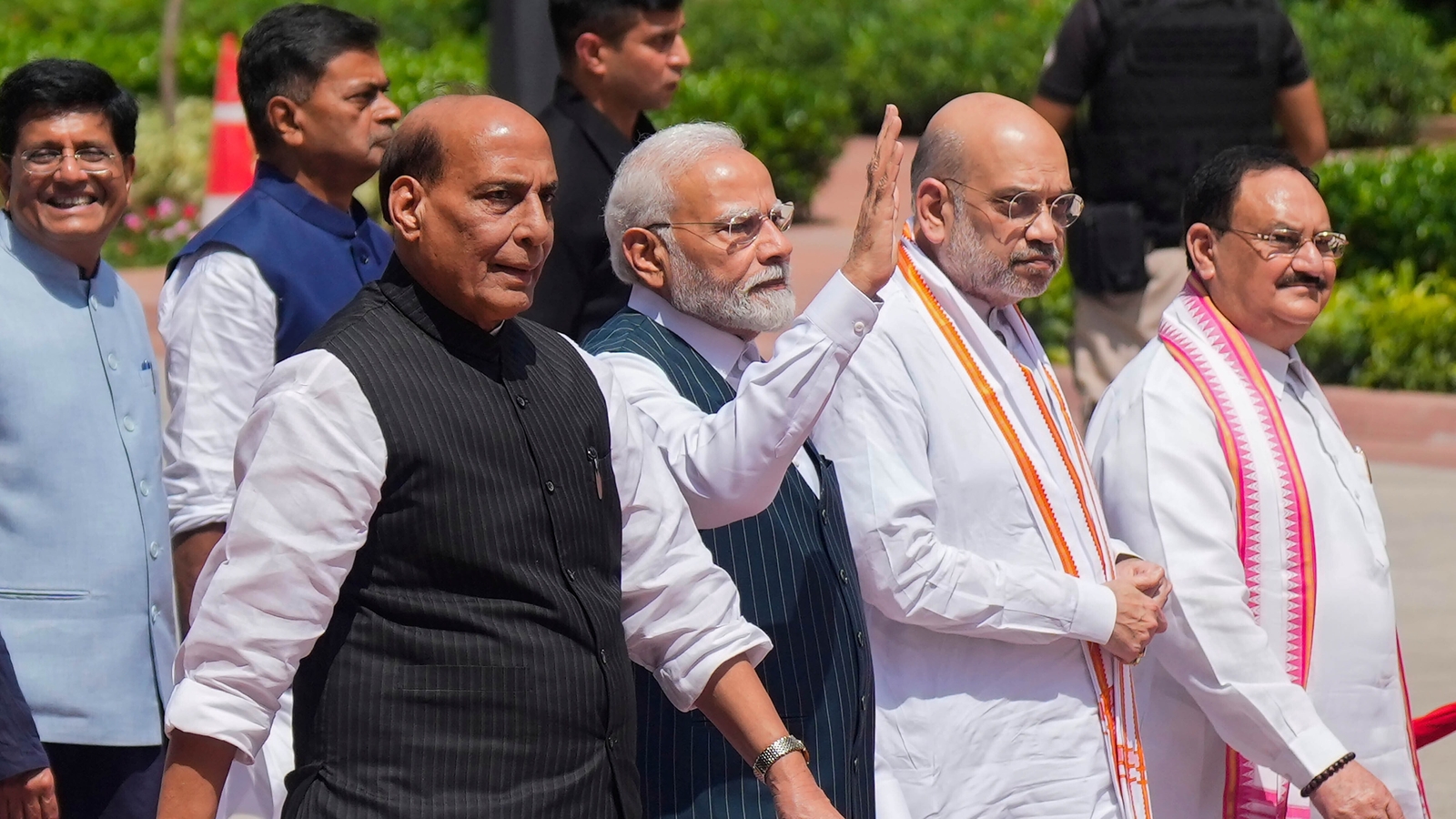
The BJP-led Union government has renewed its push for the passage of the Constitution amendment bill on women's reservation and the delimitation bill, with Prime Minister Narendra Modi repeatedly stressing the need to set aside political differences, according to people privy to details. Parliament meets on Monday for a four-day special sitting where the government is expected to make another attempt to pass the two bills, which are a prerequisite for rolling out 33% women's reservation in legislatures in 2029. Government sources, without disclosing which parties and MPs have assured support, said they are confident of securing the required backing.
Party leaders said the BJP high command did not want the bill to lapse, and channels of communication were kept open with all opposition parties. Negotiations gathered pace after the Trinamool Congress faced internal discord, with lawmakers and legislators coming out against party chief Mamata Banerjee. In June, 20 of 28 TMC Lok Sabha MPs announced their exit from the party and joined the little-known NCPI, a development described by a senior party functionary as bringing "a certain energy and drive" to the NDA's numbers. Six of nine Shiv Sena (UBT) MPs also split and joined the Eknath Shinde-led faction. When the bills were introduced for passage in April, the government secured only 298 votes in favour against the 361 needed, while the opposition had 230.
A second party leader said the home minister had stated in Parliament that southern states would not see any reduction in proportional representation. The government's biggest concern is securing the support of regional parties, including the DMK with 22 MPs, the Samajwadi Party with 37 and the NCP-Saratchandra Pawar with eight, and it has also approached unaligned parties such as the YSRCP and the BJD. According to the leader, the DMK's concerns over proportional representation and freezing delimitation for another 25 years have been addressed, and the Cabinet on Friday approved the amendments.
Leaders indicated the party also worked on the premise that MPs not wanting to vote in favour of the bills could abstain, which would lower the overall number and the two-thirds threshold. A third party leader involved in the outreach described the bills as a "win-win" for all, saying the reservation bill poses no threat to the federal structure and that constituency boundaries drawn on the 2011 census would mean more representation for STs and SCs.