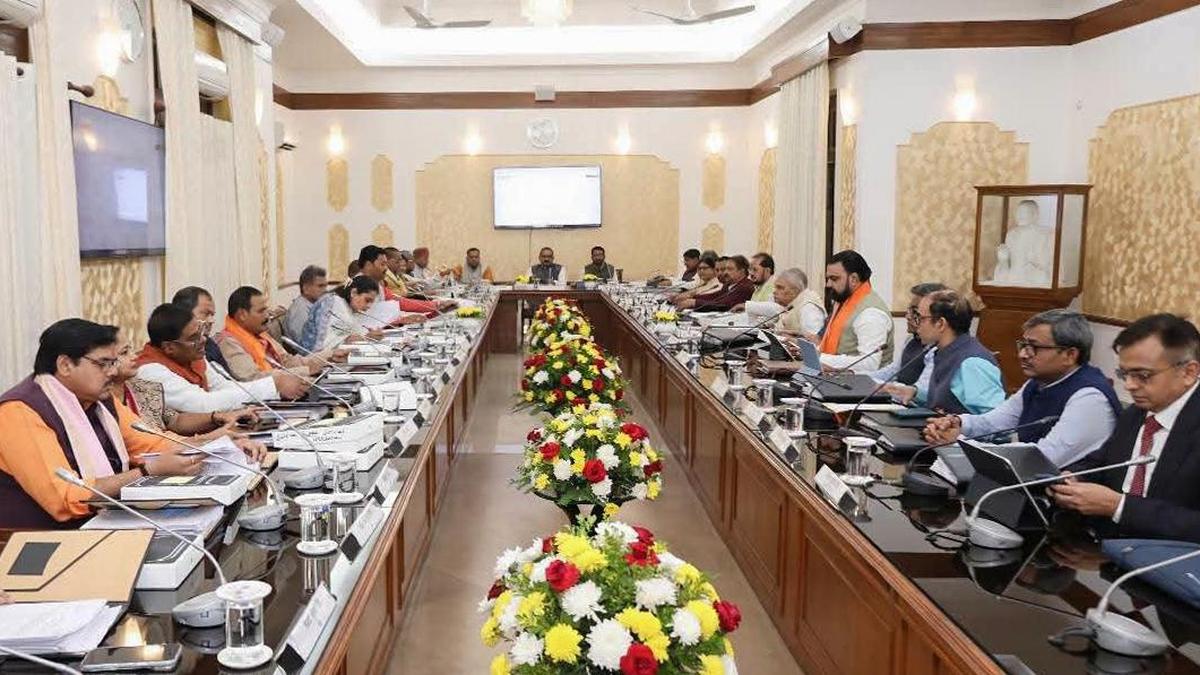
The Bihar cabinet on Wednesday (November 25, 2026) approved the acquisition of 1,294.37 acres of land for industrial areas in Nalanda, Samastipur and Sheikhpura, at a cost of ₹706.51 crore, Cabinet Secretariat Department Additional Chief Secretary Arvind Kumar Chaudhary told reporters at a post-cabinet briefing in Patna. The acquisitions will be carried out by the Infrastructure Development Authority (IDA), Patna, he said.
The meeting, chaired by Chief Minister Samrat Choudhary, took 34 decisions in all. The cabinet approved the constitution of a Bihar Economic Advisory Council (BEAC) as a special advisory body to advise the Chief Minister, modelled on the Economic Advisory Council to the Prime Minister. The council, advisory in nature, will have a maximum of five members, including a Chairperson nominated by the state government, with the Secretary (Expenditure), Finance Department, as its ex-officio Secretary.
The cabinet also gave administrative approval of ₹1,794.32 crore for the Patna Water Supply Project under the centrally sponsored AMRUT 2.0 Mission, and approved the Bihar Ki Beti Startup Challenge Scheme, under which 2,100 female students may be provided benefits from the current financial year. It cleared the health department's proposal to dismiss 11 government doctors posted in Saharsa, Bhagalpur, Supaul, Banka and Madhepura, who were found absent from their place of posting for more than five years without informing authorities, Mr. Chaudhary said.
The cabinet approved the Bihar Mineral (Concession, Prevention of Illegal Mining, Transportation and Storage) (Third Amendment) Rules 2026, with key changes to the procedure for determining mineral grade and for collecting and dividing mineral samples into three portions. Mr. Chaudhary said the meeting was conducted through the e-Cabinet system for the first time in the state; both the e-Cabinet and conventional systems will run in parallel for a few meetings before a complete transition. The system, developed by the National Informatics Centre, is currently implemented in about 11 States and is expected to save paper and the time needed to distribute documents to ministers.