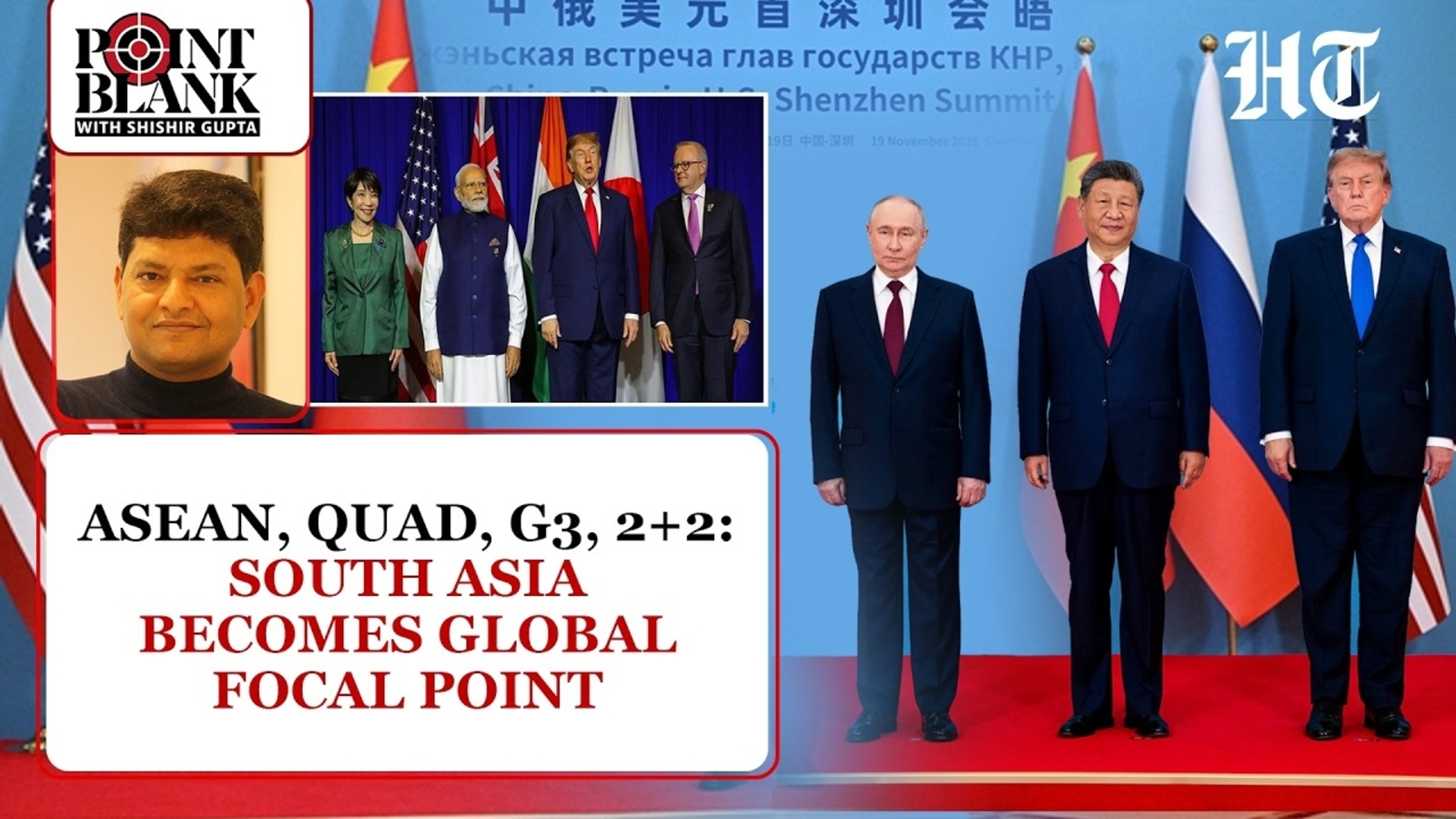
Shishir Gupta, Executive Editor, speaking with Senior Anchor Aayesha Varma on Point Blank, drew a distinction between diplomatic spectacle and strategic substance in assessing Asia's recent diplomatic activity. He argued that the real measure of a summit lies in what follows it: whether tensions ease, agreements become operational and countries gain room to protect their interests.
On ASEAN, Gupta said Southeast Asian nations seek enough peace and stability to sustain economic growth, engaging China, India and the United States to preserve commercial opportunities rather than to choose sides. However, he noted that China's expanding footprint is creating friction with countries including the Philippines, Indonesia and Japan, which are hedging by strengthening ties with other powers. He argued a durable equilibrium will remain difficult unless China moderates its behaviour, and pointed to Japan's position linking a Taiwan contingency to its own security as evidence that regional flashpoints cannot be treated in isolation.
Gupta rejected the view that the Shenzhen trilateral involving the United States, Russia and China was only talk, while cautioning against calling it a breakthrough before its understandings face practical tests. He identified areas of significance including the future direction of the United Nations, oil-market stability, nuclear restraint and the treatment of state officials by international judicial institutions, describing the meeting as an opening whose value depends on implementation.
On the Quad, Gupta highlighted a proposed business forum, with its first meeting expected in Mumbai the following year, and maritime cooperation involving American-origin patrol aircraft including India's P-8I to improve interoperability and shared maritime awareness. On the India-Japan 2+2 dialogue, he pointed to missile testing at India's Pokhran ranges as a potentially significant area of cooperation, while framing his broader argument around Japan's strategic choices.